Civil society and disability rights advocates have blamed the National Assembly for what they describe as a lack of political will on the continued deadlock over constitutional reform, warning that partisan interests are slowing The Gambia’s democratic transition and delaying key governance reforms.
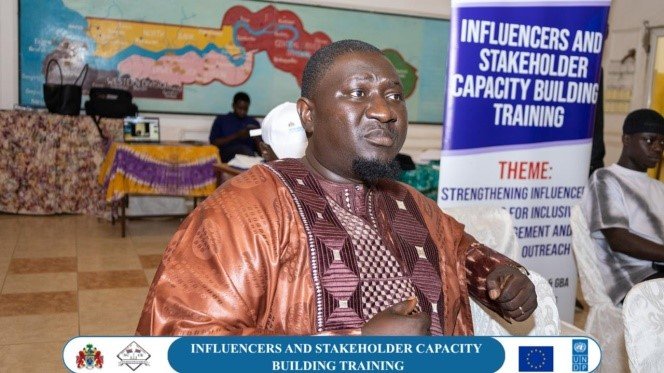
Speaking in separate interviews, Ansuman Camara, National Coordinator of Activista Gambia, and Lamin Manneh, Chairman and Secretary General of the National Organization for Disabled and Orphans (NODO), said the failure to adopt a new constitution remains one of the country’s biggest political setbacks since the democratic change of government in 2016.
Camara said the biggest obstacle to establishing a Third Republic is the absence of political will among lawmakers.
According to him, members of the National Assembly have become increasingly influenced by political party interests rather than the concerns of the citizens they represent.
“For me, the biggest stumbling block for a Third Republic or ushering in a new constitution is political will,” Camara said.
He argued that lawmakers should place the interests of the Gambian people above partisan considerations when dealing with issues of national importance.
Camara further expressed concern about what he described as a pattern in which public attention is diverted from pressing national matters to other emerging political issues.
He said important debates often fade from public discussion before meaningful solutions are found, allowing critical national concerns to remain unresolved.
The Activista Gambia coordinator also highlighted political patronage as a persistent challenge within the country’s political system.
According to him, political parties sometimes reward loyalty and long-standing relationships rather than competence, with appointments and opportunities occasionally influenced by family connections and political affiliations.
He said such practices have remained deeply rooted in Gambian politics and continue to undermine merit-based leadership.
On women’s rights and political participation, Camara said there is a clear distinction between women who have access to civic education and those who do not.
While organised groups such as the Rural Women Assembly increasingly advocate for their rights and responsibilities, he noted that many women in less privileged communities often focus on obtaining basic resources and economic support because of their immediate needs.
Despite his concerns, Camara acknowledged that The Gambia has made democratic gains since 2016.
However, he warned that incidents involving the arrest, detention and prosecution of protesters continue to raise concerns about civic freedoms and the protection of fundamental democratic rights.
“We still encounter issues around shrinking civic space,” he said.
For his part, NODO Chairman and Secretary General Lamin Manneh pointed to the failure of the 2020 Draft Constitution as evidence of the challenges facing the country’s reform agenda.
He said the draft constitution contained important provisions that would have enhanced the political inclusion and representation of persons with disabilities.
According to him, the proposed constitution offered an opportunity to strengthen democratic participation for groups that have historically been underrepresented in national decision-making.
“But unfortunately, because of political sentiments and interests, that 2020 Draft Constitution never went through,” Manneh said.
He argued that the failure to pass the draft constitution has had significant consequences for persons with disabilities and has slowed efforts to deepen democratic governance.
Manneh also criticised what he described as inconsistencies in the application of human rights principles, insisting that rights should be protected equally and without political influence.
At the same time, he acknowledged that the political environment has become more open than it was before 2016, enabling greater citizen participation in public affairs.
“It is more conducive now than before,” he said, adding that more Gambians are willing to engage in political activities because they feel freer to do so.
Drawing from his engagements across the country, Manneh said many rural women continue to prioritise access to resources, infrastructure and social services due to the economic and development challenges facing their communities.
As a disability rights activist and former independent parliamentary candidate, he said persons with disabilities are becoming increasingly active in politics but still face barriers to full participation.
He called on political parties to create more opportunities for persons with disabilities and ensure that inclusion becomes a practical reality rather than merely a political slogan.