The war on Iran has caught everyone on the back foot. Operation Epic Fury seems, for the moment, like an epic miscalculation. In response to the illegal and unprovoked attack from the US and Israel, Iran has thrown global energy markets into chaos.
But while the war has been met with condemnation, it appears also to have been met with a more muted response than was the Gaza genocide, even in its early days.
Dr Shahd Hammouri, co-author of the Gaza Tribunal report published last week and an international law expert at Kent University, said that the war confronted a movement “exhausted” by the scenes of death and destruction which have poured out of the Middle East virtually unabated since October 2023.
She says that in the post-Cold War era, left-wing political movements – of which the anti-war campaign is one of the largest components – have lost “capacity to think ideologically or to challenge the existing ideology”.
“It is as if we’re starting from point zero and the point zero is really confusing,” Dr Hammouri added.
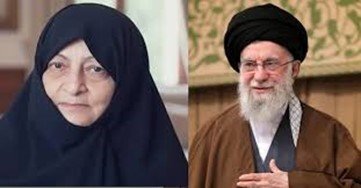
While there have been protests against the war on Iran since the opening salvo, which killed the country’s supreme leader Ali Khamenei on February 28, these appear muted in comparison with the mass movement which mobilised against the Gaza genocide.
For Dr Hammouri, the movement against the war faces “narrative” problems which have been exacerbated by the media.
Part of this has been the amplification of anti-regime voices in the Iranian diaspora, she said.
“There is the idea that if you are standing with Iran, you are somehow supporting the IRGC, and again that has been really put under the light in the media,” Dr Hammouri added.
In addition to this, critics of the war in Iran are asked, “what about the nuclear weapons?”, the legal academic said.
Donald Trump boasted last year that he had “obliterated” the country’s nuclear capabilities, only to revive allegations that the country was developing weapons of mass destruction less than a year later as a pretext for the war.
This came despite Iran agreeing to a nuclear deal under the Obama administration, which was torn up by Trump during his first term in office.
The scenes of chaos engulfing the Middle East – as Israel bombs civilians in Lebanon and Iran while the US’s allies in the Gulf, such as Qatar, see their vital energy infrastructure taken out in retaliation – are symptoms of “a dying empire”, according to Dr Hammouri.
This analysis has been advanced by others and goes something like this: China has emerged as the major economic competitor to the US, sparking significant anxiety among the American elite about the future of their global dominance.
The theory of a dying empire is clearly evident in the economics, in the sense that these states no longer have the majority of control over industrial production,” said Dr Hammouri.
“Tectonic shifts are coming, and the US refuses that, which is why we’re seeing it make more and more mistakes in its strategic decision-making.”
During the period of globalisation, when America emerged as the predominant and unrivalled superpower after the collapse of the Soviet Union, the US touted its “moral superiority” as evidence of its right to rule the roost.
“What is clear now, now that it has stopped using that tool, is that its power to convince people of why it needs to be the number one state has really been demoted,” said Dr Hammouri.
“The only way that it can safeguard its power is by excessive military use, rather than by soft power.”
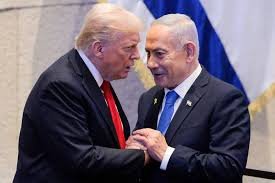
This is what is becoming known in anti-war circles as “the Gaza doctrine”. Campaigners say that the lessons Israel and the US learnt in Palestine – chiefly, that it could flagrantly break international law with impunity – are now being put into practice to brutal effect in the wider Middle East.
“This notion has been used quite prevalently since the start of the Iran war, in the idea that Israel is now taking forward the Gaza doctrine,” Dr Hammouri said, pointing to Israel’s invasion of southern Lebanon and bombing of civilian buildings in Beirut.
“We are seeing the same patterns of the excessive targeting of civilian infrastructure, as well as hospitals, schools, the obliteration of whole families.”
The international law expert said that Israel argued this on the grounds that Hezbollah and the Islamic Revolutionary Guard Corps (IRGC) have civilian as well as military functions, making “anyone who is affiliated” a legitimate target in Tel Aviv’s telling.
“The reality is, for generations, the world has given Israel a much higher margin of tolerance in relation to how much death and misery it can impose,” she added.
For anti-war campaigners like Dr Hammouri, the question is: how can people be mobilised against the attack on Iran?
“This is the saddest thing I could ever imagine in the world, but UK citizens and US citizens will hit the streets the minute they start to feel it in their pockets,” she said.
Given the wanton destruction of vital energy supply infrastructure in the region, that could be sooner rather than later.
“People are exhausted from antiwar organisation for more than two years,” she told the Sunday National. “A lot of these movements have built their strategy on a crisis response rather than a long-term strategy.”