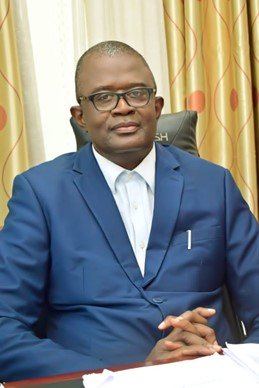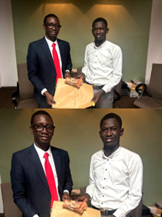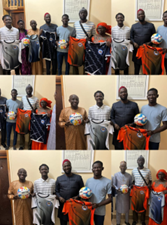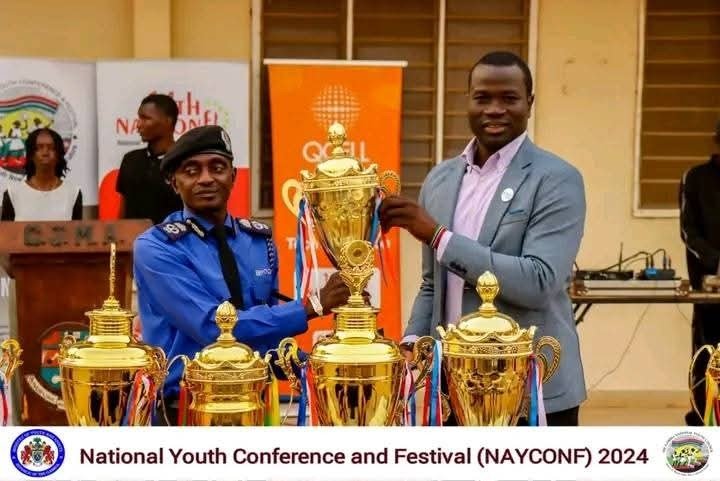
The passionate King Colley leads the Gambia Handball Association (GHA), and he is optimistic that Gambian handball is destined to change for the better.
As a renowned police commissioner steering the Mobile Traffic Unit, King is also notable for his strategic expertise in sports administration.
His vision for a prosperous Gambian handball propelled him to the helm of the association in 2023 for a four-year term, and he believes the time for change is now.
Success is on the horizon, he believes with a firm conviction. “Two to three years ahead,” King says, “handball will represent this country at some of the most prestigious international competitions.”
He states that they have unrolled high level trainings to ensure that the coaching expertise, the human resource is built and that this ultimate goal of uplifting handball is achieved.
The Senigambia confirms. Yes, a 5-day intensive training was staged recently at the Seaview Hotel and Resort in Kolloli, where thirty coaches were rallied to be technically trained and certified (licensed) in handball. The GHA affirmed that this is just the beginning.
King further explains: “The steps are to reduce the burden, because normally when we have an international game organized by CAF, we do hire our coaches from Senegal. But now that they [the Gambian coaches] are doing the same license, that is going to reduce the burden on us. Having trained 36 coaches, including the Physical Education (P.E.) teachers across the country, will help us greatly to boost the sport.
“In three years, Gambia will show itself because this past season, we came out third. In a competition that is organized by CAF involving about nine countries, The Gambia came out third, and with a foreign coach.”
Handball Waits: All Eyes on Football
Handball, having been around for some time now as a type of sport, has not yet found the key to make the breakthrough required for national eminence and popular recognition, even after so many decades since its introduction to The Gambia.
Workshops, seminars, conferences, and convergences of various dimensions have been held over the years, with various kinds of advocacy for handball by private and government-affiliated sports officials’ institutions.
Meanwhile, having qualified only recently for the first time to play in the Africa Cup of Nations (AFCON) by the Confederation of African Football (CAF), The Gambia is a nation that seems to have only football at heart. Every youngster believes he was born to become a Barcelona or Madrid star someday or play for a first division league at least.
The heroes whose names shake communities and rage gatherings in The Gambia are Sadio Mane, Messi, Ronaldo, the likes of Cole Palmer, and the emerging Lamine Yamal.
The heroes are not Thierry Omeyer, Nikola Karabatic, Mikkel Hansen, or Mathias Gidsel. In fact, while these names have shaken international handball courts across continents, becoming as legendary as those big names in football, they are unheard of in The Gambia. They raise no eyebrows out of admiration or awe when mentioned before Gambian gatherings.
But perhaps Gambians generally love sports, without much distinction in terms of subcategories. Perhaps this lack of popularity of handball, unlike football, stems from inadequate infrastructure for the sport and insufficient expertise in that regard.
Regardless of the sporting type, the issue of infrastructure and expertise is a broad challenge for The Gambia. Handball does have potential.
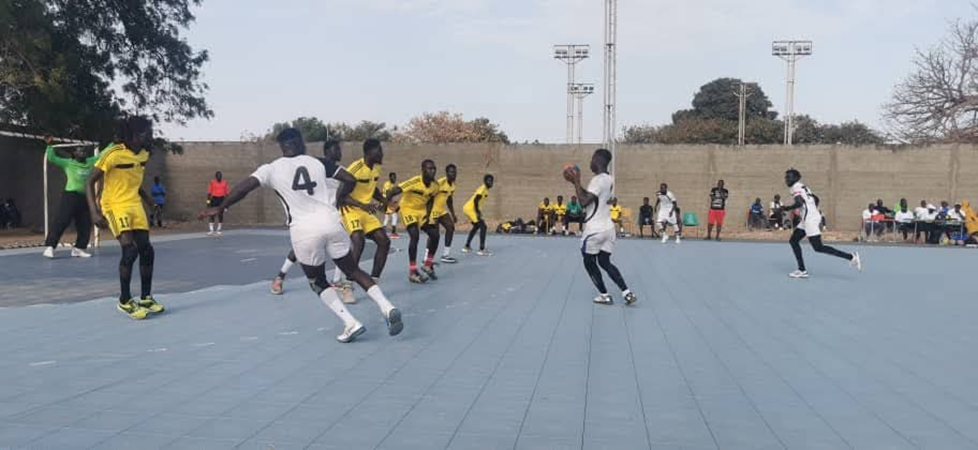
How Committed is the Government in Promoting the Sport?
The umbrella body, under by King, is striving hard for change. But what is the government doing to address the infrastructural and expertise challenges? Is the government committed to promoting the sport?
In the endeavour to ascertain the level of the government’s commitment to promoting handball, the National Sports Council’s executive director, Mahmud Lamin Jawla, was interviewed for an exclusive interview.
The institution (NSC) Mr Jawla heads was established on the 14th of December 2000 by an act of parliament bearing the same name, and it is tasked with the responsibility of overseeing, regulating, and promoting sports development in the country.
As an institution, working closely with and directly under the Ministry of Youth and Sports (MoYS) and also having the vision of propelling The Gambia to a high international standard while unifying the people through sport, it shoulders invaluable significance.
The NSC boss underscores that the government is highly committed to enhancing sports nationally. He emphasises the government’s drive to put in place adequate infrastructure required. That is the focus, he says.
“Because we know we have the talent,” he avers. “We have the numbers here, but now the infrastructure is very important. This is what is going to enhance the performance of our athletes. If we want to go higher, we must have the right infrastructure, so that these young people, in both handball and any other sport, will be able to focus their talents and train in better environments.
“So you can see what we are doing right now in Mboyo Field. Apart from the football pitch, there is a multi-purpose lawn which is also under construction. There will be handball, there will be volleyball, there will be basketball, and in other areas. That is what we have done.
“So this is one of the broader steps being taken in trying to overhaul the handball sporting domain in The Gambia?” the Senigambia asks.
“Very well,” the NSC affirms. “This is one of them, and we will continue to do that because that is the focus of the government of The Gambia through the Ministry of Youth and Sports (MoYS).”
Young Coach of Exotic Optimism
Adama Faye, a sports technician/official from the Serrekunda East Sport Development Organisation (SESDO) and a young coach in the first division, who is currently benefitting from the ongoing 5-day intensive handball technical coaching course, opines that the handball landscape is changing.
Asked if Gambian handball is really improving for the better, as claimed by officials, he answers in the affirmative, acknowledging drastic improvement as compared to before.
She notes that it is equally promising that women are involved, and she is currently taking part in the technical training course with other women.
“We are here to empower the women,” she firmly says. “They have tried such an initiative, and this is the first time they are staging such technical training for the D license in handball. I’m hopeful that things will drastically change.”
What next?
The moves are commendable, and true change in the realm of handball seems to be within reach, but would it be achieved, or would it just continue to be business as usual, only adorned by intermittent trainings and conferences that bear no tangible results?