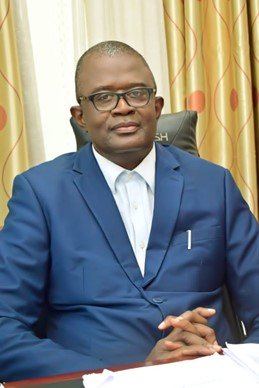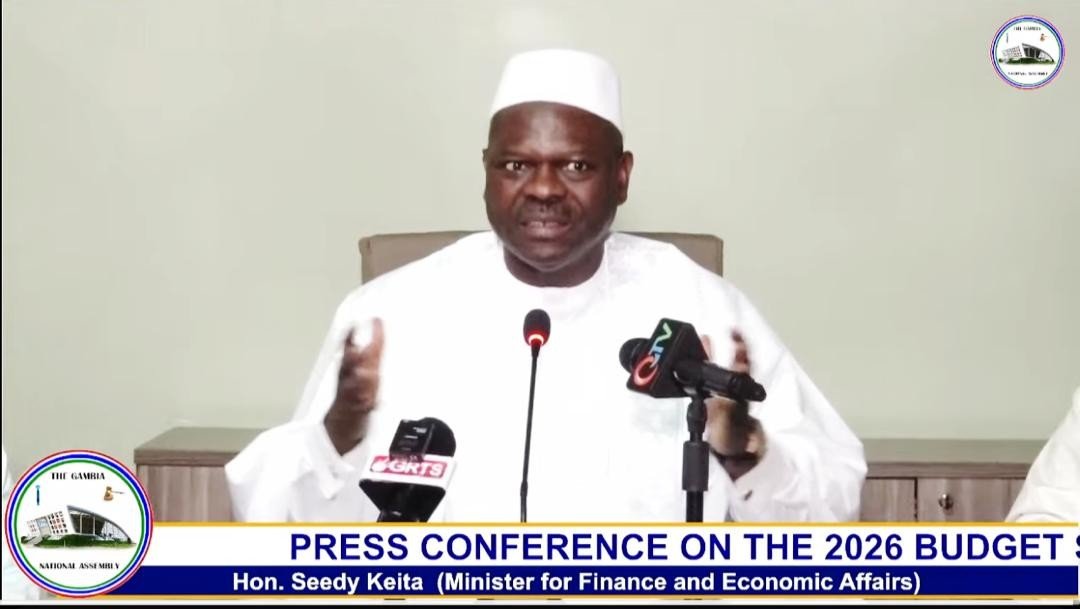
The Minister of Finance and Economic Affairs, Honourable Seedy K.M. Keita, said the government of The Gambia has vowed to complete 355 kilometers of priority roads nationwide and modernize key transport infrastructure, including seaports and the airport, under the D55.29 billion 2026 budget unveiled on Friday, December 5, 2025, at the National Assembly.
The 2026 budget, themed “Improving the Well-Being and Quality of Life of Gambians,” emphasised infrastructure development as a critical driver of economic growth, job creation, and regional connectivity.
According to the Finance Minister, ongoing projects such as the Banni-Salikene-Njaba Kunda and Brufut-Madiana-Banyakang-Kunkujang Marima roads have reached 85 and 87 per cent completion, respectively, while urban roads in Banjul are near completion. Overall, the nationwide road network projects have achieved a 70 percent completion rate.
“Investment in transport infrastructure is central to our strategy for economic transformation and service delivery,” the Minister said.
He highlighted that infrastructure improvements aim to enhance safety, reduce travel times, and increase access to markets and essential services for citizens across the country.
However, he said in addition to roads, the government plans to advance the Sanyang Deep Seaport project early next year, a move expected to accommodate larger vessels, reduce freight costs, and stimulate trade.
According to him, the modernisation of the Banjul International Airport, including the construction of an ultramodern passenger terminal, is also planned through a public-private partnership.
“These projects are expected to attract investment, boost tourism, and support the expansion of trade corridors,” he noted.
He indicated that the budget further earmarks D1 billion annually to subsidize electricity, while investing in agriculture with D900 million allocated for crop financing and fertilizer subsidies, and D300 million provided to the National Food Security, Processing and Marketing Corporation to strengthen food security initiatives.
“Despite fiscal constraints and a record public debt of D129.5 billion, the government insists that strategic investment in transport, agriculture, and energy will promote economic resilience, create jobs, and improve living standards,” he explained.
The Finance Minister said the 2026 budget is designed to ensure sustainable development while safeguarding public finances and advancing national priorities.