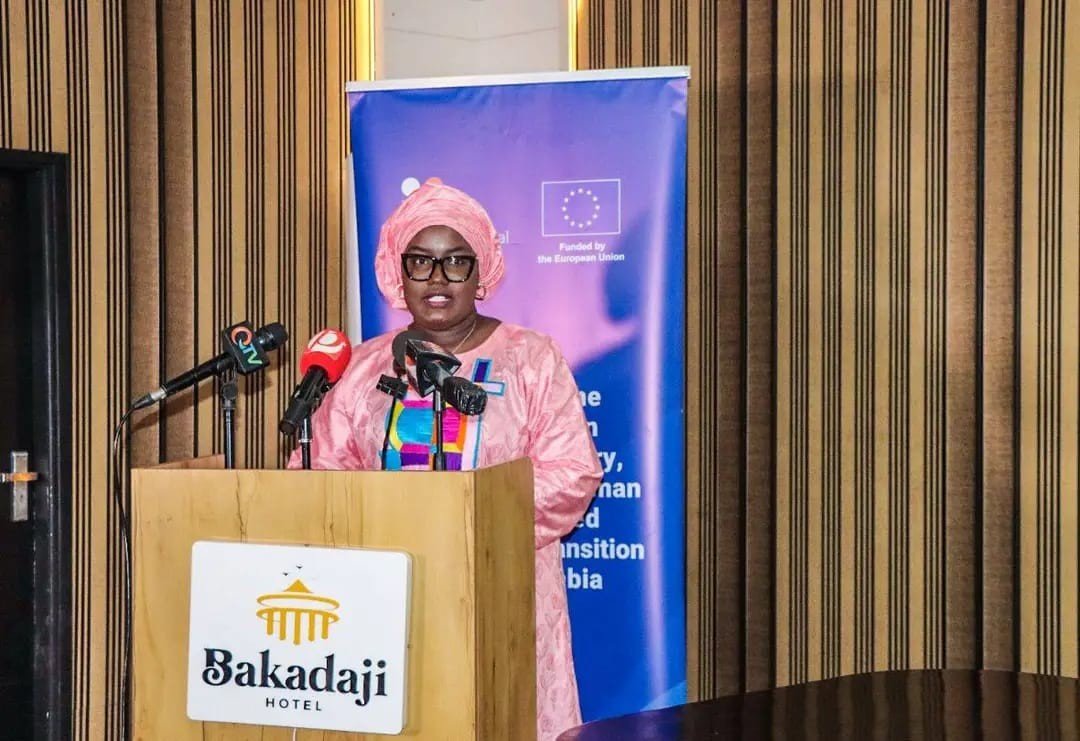
Head of International IDEA Gambia Office, Jainaba Faye, has underscored the significance of the legislature to effective governance.
At the opening ceremony of a two-day capacity building training for staff of the National Assembly communication unit, Madam Faye stated that the National Assembly serves as central pillar to effective governance by ensuring sound policies, decisions and debates are clearly determined in parliament.
The training was conducted to enhance public engagement, improve transparency, and strengthen the institution’s ability to communicate its legislative work effectively.
Facilitated by International IDEA and funded by the European Union in The Gambia, the training formed part of the EU-funded Consolidation of Democratic Dispensation (CODE) project, which has also supported the development of the National Assembly’s four-year Strategic and Investment Plan and three-year Communications Strategy.
“Your role is not just supportive; it is central to effective governance,” Mrs Faye told participants, saying: “Digital skills are no longer optional; they are essential to making legislative processes accessible.”
She emphasised the urgency of adapting to evolving media landscapes, saying the communications strategy aims to bridge the gap between the legislature and the public, improve communications and flow of information within the National Assembly as well as with its valued stakeholders.
The strategy, she added, was developed within the framework of creating awareness about the National Assembly and its functions, promoting positive change in perception, beliefs, behaviours and attitudes towards the National Assembly and most importantly, projecting the National Assembly as a trustworthy and transparent institution.
Raphaël Brigandi, Deputy Head of the EU Delegation to The Gambia, reinforced this message, emphasising that “effective communication is the heartbeat of policymaking”. He commended the National Assembly’s commitment to fostering transparency, highlighting that the EU’s support aligns with shared democratic values.
The goal of the training was to effectively convey quality and timely information to the public and better explain the substantial work of the National Assembly members, he said.
National Assembly clerk Kalipha MM Mbye formally opened the session, underscoring the significance of communication in bridging the gap between the legislature and the public. “Capacity building is key to honouring our social contract with the people,” he remarked. “A well-structured communications framework will ensure the public understands the purpose of legislation and feels empowered to contribute to the process.”
Clerk Mbye encouraged participants to apply new strategies in their daily work and explore avenues for innovation. He reaffirmed his open-door policy for staff seeking further development opportunities and encouraged International IDEA to continue providing mentorship and technical support.
“Public access to Parliament has never been greater, yet alienation from democratic processes persists,” he noted. “This training equips us to reverse that trend by delivering targeted, relatable messaging across all media.”