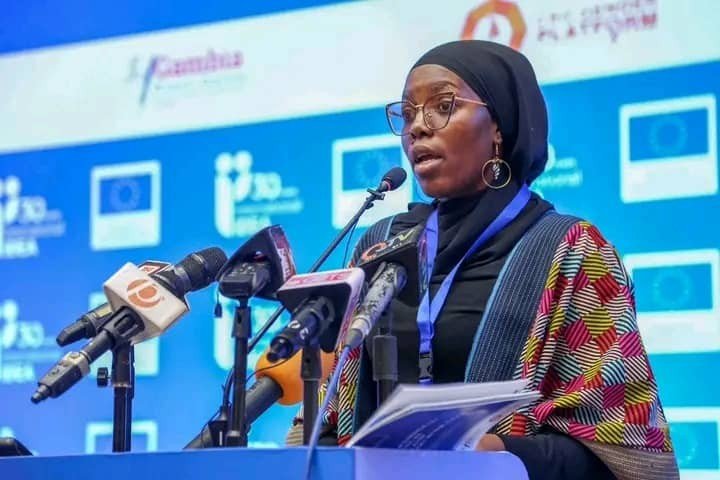
The President of the Gambia Press Union (GPU), Isatou Keita, has stated that women’s participation in politics is not a symbolic exercise; rather, it is a democratic necessity.
She noted that, despite the active roles women play in communities, civil society, and the economy, they remain underrepresented in elected office, party leadership, and senior public positions.
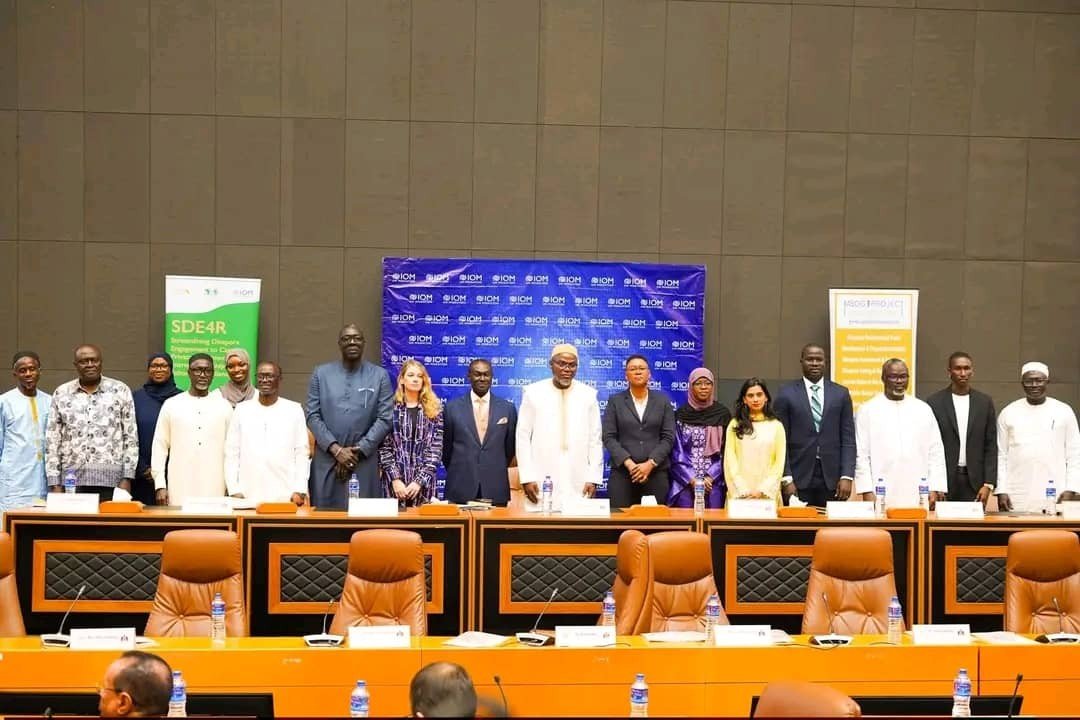
The GPU President was speaking at the National Conference on Women’s Political Participation in The Gambia, organised by International IDEA, held under the theme “Breaking Barriers, Building Power: Advancing Women’s Political Participation and Representation in The Gambia.”
“These disparities point to structural, cultural, and economic barriers that continue to shape access to political power,” she said.
She explained that efforts to improve women’s political representation must extend beyond rhetoric; political parties, state institutions, and electoral bodies must take deliberate steps to create fairer conditions for women candidates, including internal party reforms, access to campaign resources, and the enforcement of existing legal and policy commitments on gender equality.
Madam Keita indicated that this gathering responds to a long-standing gap between constitutional commitments to equality and the reality of women’s limited presence in political decision-making at national and local levels.
The leader of the main consortium in the country stated that the media occupies a central position in this landscape.
“Through the stories it tells and the narratives it reinforces or challenges, the media influences how women leaders are perceived and how political ambition by women is normalised or questioned. There is a responsibility to move beyond stereotypes and personality-driven coverage, and instead focus on policy positions, leadership records, and accountability.”
She emphasised that GPU is committed to contributing to these efforts through ethical reporting, public interest journalism, and sustained engagement on issues of gender, governance, and democratic accountability.
“Expanding women’s political participation strengthens democratic institutions and reflects the realities and aspirations of Gambian society,” she added.
She observed that the conference provides a timely space to assess progress, confront persistent gaps, and agree on practical steps that can be implemented ahead of upcoming elections, opining that Dialogue must lead to measurable actions that strengthen women’s participation across political structures.