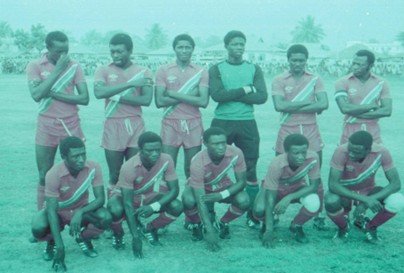
Forty-three years. That is how long it took for a footballing story that began in pain, disappointment, and unfulfilled promise to come full circle.
In May and June of 1983, the Gambia national team was camped at the military barracks at the Bakau Depot, preparing for a momentous assignment: hosting Ghana’s Black Stars in an Africa Cup of Nations qualifier.
Those were different times. Life in camp was a mixture of military discipline and footballing ambition. Apart from the beautiful morning parades and the sometimes-intimidating firing practices, every day was devoted to preparing for the arrival of one of Africa’s most respected footballing nations.
The excitement was palpable. Gambian football was on the rise, and there was a growing belief that the national team could announce itself on the continental stage.
But just days before the big game, something happened that left a lasting scar.
One of our best players — whose name I will withhold — was sent out of camp. To this day, I remain convinced that the decision was unfair and, quite frankly, wrong. In football, as in life, some decisions linger long after the final whistle has gone.
That same night, I experienced a frightening encounter of my own. In the darkness, a Senegalese soldier attempted to stop me, apparently trying to say “HALT.” For a terrifying moment, I came close to being killed in cold blood. Thankfully, instinct took over. I quickly shouted, “Footballeur!”
That single word may well have saved my life. Then came match day.
It was a bright June Sunday afternoon, and the atmosphere surrounding the game was electric. Standing opposite us were Ghana’s star-studded Black Stars, a team carrying enormous pedigree and continental respect. Among their ranks was the legendary left-back Ofei Ansah, a name that commanded admiration across African football.
We fought, but Ghana prevailed, winning 2–0.
For Gambian football, the defeat was painful. It hurt deeply because we believed our football was on a meteoric rise. There was talent, determination and a growing sense that the country could compete with the best on the continent.
The defeat also eventually brought a coaching change.
But football has a remarkable way of keeping old stories alive.
Sometimes, it takes decades for a chapter to close. Forty-three years later, the story came full circle.
The Scorpions of The Gambia walked into the Accra Sports Stadium — one of the great citadels of African football — and faced the once-revered Black Stars of Ghana.
This time, the script was dramatically different.
Ghana raced into a 2–0 lead, seemingly recreating the painful scoreline of 1983. But the Scorpions refused to surrender. They fought back, clawed their way into the contest and ultimately turned the game completely on its head.
The Gambia won 4–2.
A two-goal deficit had become a two-goal victory.
For those who lived through that 1983 encounter, this was more than just another football match. It was a reminder of how far Gambian football has travelled — from the military barracks at Bakau, from the disappointment of a 2–0 defeat, from the days when our dreams seemed bigger than our circumstances, to a night in Accra when the Scorpions scored four against Ghana.
Football is measured in goals, points and results, but its memories are measured in decades.
For me, the significance of that 4–2 victory goes beyond the scoreline.
It was 43 years of memories.
43 years of wondering what might have been.
43 years of carrying the pain of that 1983 defeat.
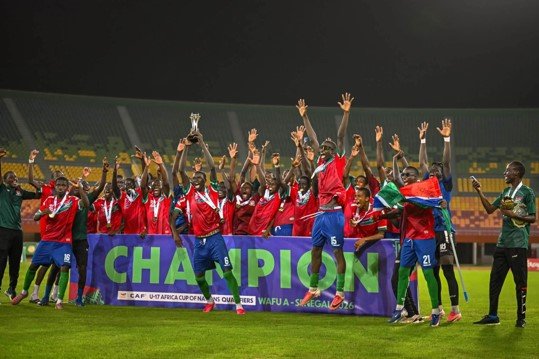
And, finally, 43 years later, a new generation of Gambian footballers wrote a very different ending.
The Scorpions did not simply beat Ghana that night. They reminded us that in football, history can wait a very long time — but sometimes, it comes back looking for you.
And when it does, it can be beautiful.
Sang Ndong, Lamin Ownens, Bill Badjie, Dodou Saine (RIP), Louis Thorpe, Saihou Sarr, Ebou Dubois, Saul Samba (RIP) Aziz Corr and Bai Malleh Wadda the kids came through for you all – revenge is sweet, even 43 years later.