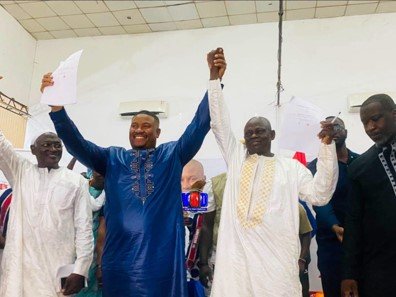
In a political landscape often defined by rivalry and short-term alliances, Tuesday’s signing of a Memorandum of Understanding (MoU) between the United People’s Democratic Movement (UNITE) and the National Unity Party (NUP) has been hailed as a landmark moment.
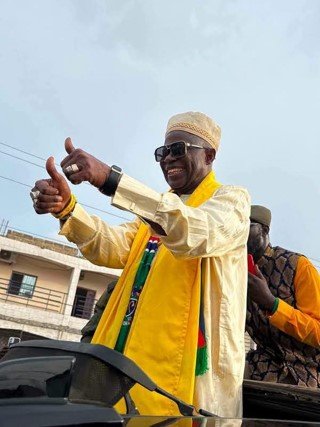
At the ceremony in Banjul, UNITE leader Talib Bensouda stood alongside NUP’s Lawyer Lamin J. Darboe to announce what he described as “a declaration that two political parties can come together, not because they agree on everything, but because they agree on the fundamental principles that must guide our Republic.”
A Shift Toward Principle-Based Politics
The agreement, leaders stressed, is not a merger but a partnership rooted in shared values. Bensouda underscored that the MoU represents a commitment to prioritize national interest over partisan gain. “This is more than a political document,” he said. “It is a powerful statement that country must come before party.”
Darboe echoed the sentiment, noting that Gambians are yearning for politics that transcends electoral convenience. “Our citizens want leaders who can rise above division and work together for the common good,” he remarked.
Context and Significance
Observers say the pact could mark a turning point in Gambian politics. Historically, alliances have often been formed around elections, dissolving once the polls close. This agreement, however, is framed as a long-term collaboration on governance, transparency, and national development.
Political analysts suggest that the MoU may set a precedent for other parties to explore principle-based cooperation. In a country where coalition politics has played a decisive role in recent years, the UNITE–NUP partnership could reshape expectations of how parties interact.
Public Reaction and Future Outlook
Early reactions from civil society groups have been cautiously optimistic. Many see the move as a step toward building trust in democratic institutions. Others remain skeptical, warning that the success of the pact will depend on whether both parties can translate lofty principles into tangible action.
For now, the symbolism of the signing carries weight. It signals to Gambians that unity is possible even in a competitive political environment. Whether this partnership endures will be tested in the months ahead, as both parties navigate the realities of governance and public accountability