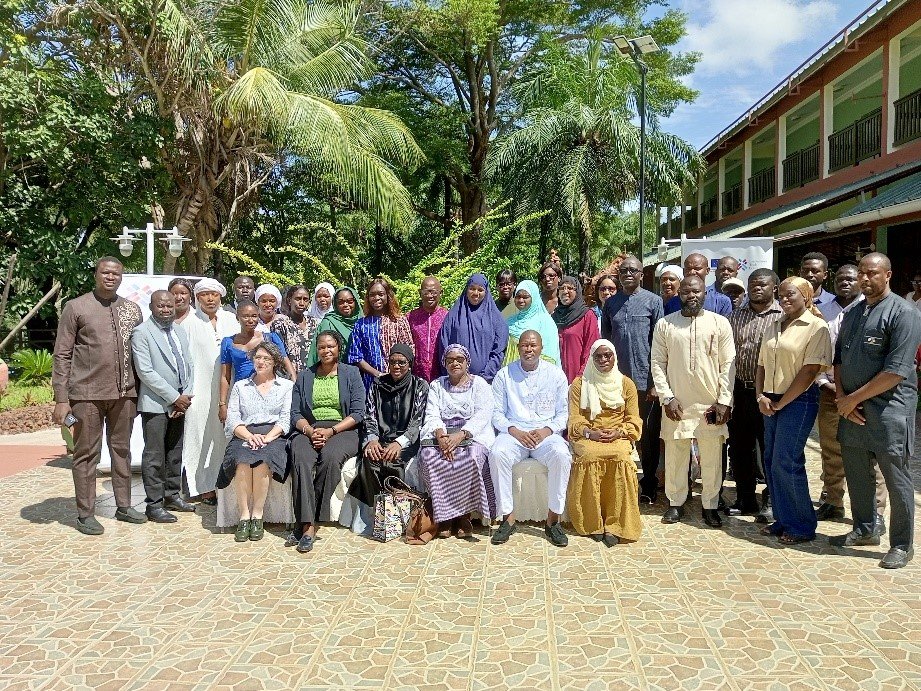
The International Trade Centre (ITC), in partnership with the European Union (EU), has reaffirmed its commitment to supporting micro, small and medium enterprises (MSMEs) in The Gambia through policy reforms, capacity building, and market access initiatives. Speaking at a workshop on Green Public Procurement, ITC representative Suwaidou Cham, highlighted the strides made in making public procurement more inclusive and responsive to the needs of MSMEs.
“Over the years, through the EU project, ITC has been supporting policy reforms in The Gambia, key among them being the public procurement policy to make it user-friendly for MSMEs,” Suwaidou said. He noted that recent reforms have introduced gender-responsive procurement and now focus on green procurement to ensure businesses align with environmental sustainability.
Suwaidou emphasised the importance of the Underdog Programme, which builds MSME capacities in product development, market access, and finance. “We understand the importance of the environment hence the environment component of procurement being looked at so that our MSMEs can be responsive to the needs and requirements of government,” he added. He stressed that climate change must be factored into daily activities and procurement processes to ensure resilience and competitiveness.
Acknowledging the support of the EU, the Ministry of Finance, and the Ministry of Tourism, Suwaidou praised the collaboration that has enabled ITC to continue its operations in The Gambia. “Without your support, collaboration and partnership, I don’t think we would be gathered here today,” he concluded.
Juldeh Ceesay, Deputy Permanent Secretary for Projects and Programs of the Ministry of Finance and Economic Affairs also addressed the gathering, underscoring the significance of the workshop in advancing The Gambia’s economic transformation. She highlighted three critical policy areas under review: the creative industry, cruise ship policy, and public procurement.
“It gives me great pleasure to join you at this important workshop, focusing on three areas that are very significant for The Gambia’s economic transformation,” Juldeh said. She emphasised that the government continues to pursue reforms aimed at strengthening economic resilience, promoting inclusive growth, and creating opportunities for Gambians, particularly young people.
Juldeh described the creative economy as “an increasingly valuable component of modern economic development,” noting its potential to serve as an engine of opportunity for Gambians. She reiterated the government’s commitment to aligning these reforms with national development priorities and ongoing public finance management.
Deputy Permanent Secretary Isatou Drammeh, speaking on behalf of the Permanent Secretary, welcomed representatives from the European Union, government agencies, private investors, and development partners. She emphasised that the guidelines are the result of a rigorous process, including regulatory assessments, consultations with ministries, and public-private dialogue.
“These recommendations advance our recovery-focused national development plan, calling on every sector to deliver growth that is resilient, inclusive, and environmentally sound,” Drammeh stated. She highlighted that the initiative aligns with the National Tourism Policy 2021–2030 and the EU-supported roadmap for tourism and creative industries.
Driving Sustainability Through Procurement
Green public procurement, DPS Drammeh explained, is a practical tool to direct government purchasing power toward environmentally friendly goods and services while building local capacity. By piloting these guidelines in tourism and creative industries, The Gambia aims to enhance resilience and competitiveness in the sector.
Drammeh also reminded participants that the revised Public Procurement Act provides mechanisms to support Gambian enterprises, including preferences for MSMEs, women, and youth-owned businesses.
The Deputy Permanent Secretary expressed gratitude to the European Union for funding the workshop under the EU Youth Empowerment Project, and to the International Trade Centre for its technical partnership.
“The doors of the Ministry remain open. We value this dialogue with the private sector, development partners, and MSMEs, and will continue to rely on it as we move from guidelines to implementation,” she affirmed.
The workshop marks a significant step in The Gambia’s journey toward a transformed, competitive, and sustainable tourism and creative industry.