Essa Faal Defection: Is It Opportunism in Its Purest Form?
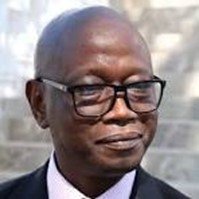
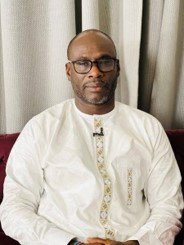
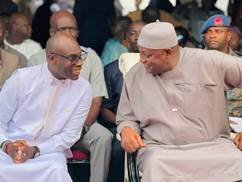
Just few days ago at State House, Sunday 27 September, to be precise, Essa Mbye Faal, leader of the APP-Sobeyaa party, formally sealed a political alliance with President Adama Barrow’s ruling National People’s Party ahead of the December 5, 2026 presidential election, declaring: “The election is over and is dead and buried. I’m no more thinking about the election because Adama Barrow has already won the election.”
There is no quarrel with alliances, since coalitions are the lifeblood of democracy. Our quarrel is with opportunism masquerading as patriotism – a disease that has crippled Gambian politics and is endemic across sub-Saharan Africa.
Essa Faal’s defection can be perceived as opportunism in its purest form. This is a man who built his entire post-TRRC political brand as an ardent critic of the Barrow regime – denouncing corruption, governance failure, economic mismanagement, and accountability deficits. He contested the 2021 election as an independent, was elected leader of the merged APP-Sobeyaa at a congress on 21 December 2024 to unseat Barrow, and spent the last year calling for Barrow’s removal. Today he sits at McCarthy Square praising the same government he vowed to rescue Gambians from.
What changed?
I opine the implicit reasons are neither ideological nor patriotic. They are transactional. Multiple sources and reports had linked Mr Faal to several issues in the political landscape of the country. These range from eyeingvice-presidential slot in a UDP-led coalition, to expecting overseas diplomatic postings for APP-Sobeyaa members. Although Mr Faal has denied such claims, allegations and reports, saying “No one gives me money” and “God knows I did not ask for any position”.
But Gambians have heard this script before. Because most politicians rarely speak their true intent. No, they don’t; they conceal it. And the truth is that it is about survival, relevance, and access to state resources after a weak electoral projection.
In the case of Essa Faal, the party he leaves behind knows it. A group of founding members, executive officers and regional chairpersons of APP-Sobeyaa publicly rejected the alliance, saying they “do not agree to the APP-Sobeyaa alliance with the National People’s Party” and accusing Faal of joining “without due process” in violation of the constitution. Veteran APP founder Dr Gumbo Touray called the move “shameful”. This is not a party moving; this is a leader decamping it should be noted.
The fact is that this political flip-flop is not Gambian exceptionalism; it is African routine.
In Nigeria, it is called “decampee” politics — where governors, senators, and presidential candidates defect to the ruling APC or PDP weeks to elections with their supporters in tow. In 2023, several opposition governors joined APC to secure second-term cover.
In Kenya, opposition heavyweights from ODM have repeatedly joined Jubilee and later Kenya Kwanza for cabinet slots. In Senegal, Idrissa Seck, once Macky Sall’s fiercest rival, joined Sall’s government in 2020 after years of attacks. In Malawi, Democratic Progressive Party stalwarts crossed to Lazarus Chakwera’s Tonse Alliance. In Liberia, political party heads and big guns defect and cross-carpet for opportunity to gain affluent positions in governance. Ditto Sierra Leone. Ditto Ghana and other African states. The logic is identical: principle until proximity to power becomes possible.
In The Gambia, we have seen it already. Mama Kandeh and the Gambia Democratic Congress joined Barrow’s grand alliance. President Barrow himself boasted: “Essa Faal acted wisely by packing his belongings, came to me, and told me he had joined me.” Who is next? Rumours swirl around smaller parties and independents who see no path to State House and prefer a seat in the banquet hall to a principled fight in the streets.
What does it mean for December 5 Presidential Election?
Mathematically, Faal brings little – he polled 2% in 2021. Symbolically, it is significant. Barrow is constructing an image of inevitability – the “election is dead and buried” narrative – to demoralize the opposition and weaken their support base, especially among youth who voted for Faal as a fresh alternative. It also fractures the opposition vote and allows Barrow to claim a broad-based “Grand Alliance”.
There is an African proverb that fits this moment perfectly: “The same sun that melts wax hardens clay.” And another, from our own Mandinka elders: “When the frog dies, the tadpole does not hold a funeral; it looks for another pond.” And the Wolof say: “When the king is not good, people still sell themselves to him.”
Essa Faal’s move is not betrayal because he joined Barrow. It is betrayal because he insulted the intelligence of Gambians by dressing a personal survival deal in the flag. He told supporters who believed in reform, transparency and accountability that they should accept that what is “destined to be” is what benefits him.
Gambian politics will remain stunted until voters punish this hypocrisy. An opposition leader who campaigns against corruption and then joins the government he called corrupt has not made an alliance. He has made a surrender. PERIOD! And history shows surrender never builds a nation. This could be political opportunism in its purest form.