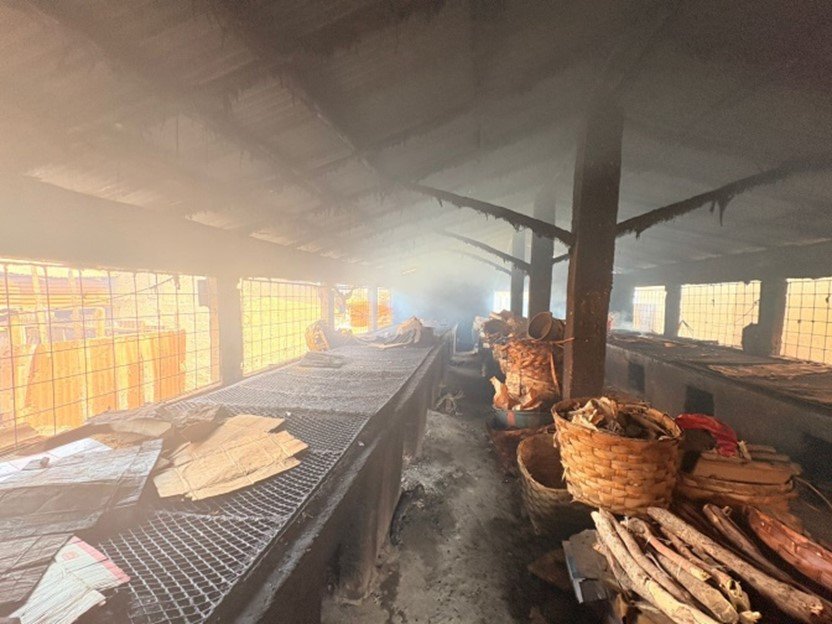
Fish smokers in Tanji have expressed dismay that business has significantly slowed compared to previous years, raising concerns about the future of the local fishing industry.
Many of them who traditionally export smoked fish to other parts of West Africa report a noticeable drop in fish supply, which has reduced their production capacity and overall income.
Vendors at Tanji Fish Landing Site say there’s been a fish shortage for over a week, linked to low catches by fishing vessels.
Once a bustling centre of smoked fish production, the Tanji Fish Landing Site is now experiencing reduced activity, as fewer catches by fishing vessels limit the amount of fish reaching processors.
Many fish smokers say the shortage, which has persisted for over a week, is affecting both production and income.
“The fish smoking before was powerful, but it is not like that now,” said Lamin Ceesay, who has spent more than 30 years in the trade. “Before, fish was plenty and we worked every day. Now demand is more than the fish itself, and sometimes you can stay two to three months without working.”
According to the smokers, the cost of fish has also increased, further squeezing profits. A basket that previously sold for about D1,500 now goes for D1,600, D1,800, and in some cases even higher. For small-scale processors, this has made it difficult to maintain their business.
“We can only afford small quantities now,” Ceesay explained. “After smoking and selling, what you get is very little. It is becoming difficult to feed our families.”
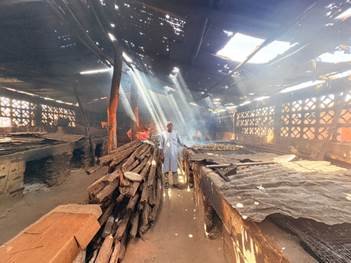
Veteran smoker Omar Touray, who said he joined his father in the trade over 40 years ago, described the current situation as a major shift from the past.
“Before, we were exporting smoked fish to Sierra Leone, Nigeria and even Europe,” he said. “Now even selling locally is not easy. Wood is expensive, and sometimes it is hard to get because it comes from Foni. The business is no longer profitable like before.”
Smokers and fishermen point to increased fishing pressure, including the presence of foreign vessels, as a key factor behind the declining catches.
They claim the growing number of boats in Gambian waters is driving fish away and intensifying competition at landing sites.
“There are too many vessels, and most of them are not Gambian-owned,” Ceesay alleged. “When there is catch, many buyers rush for the fish, and some of it is taken to Senegal or upcountry.”
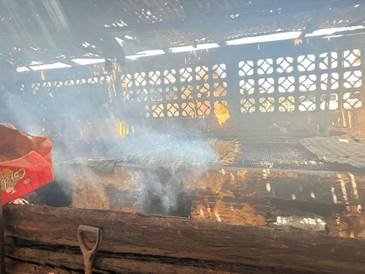
For women like Mariama Saidy, the challenges go beyond supply. She highlighted poor working conditions at the smoking site, including excessive smoke, lack of space and no electricity at night.
“When all of us are working, the smoke is too much and you cannot even see clearly,” she said. “At night, it becomes very dark, and we don’t have power here. These are serious problems for us.”
Despite some support from the Ministry of Fisheries that included protective gear and training, the smokers say more intervention is needed, particularly in improving infrastructure and access to finance.
As the problems persist, many people fear that without urgent action fish smoking in Tanji could decline drastically, putting livelihoods at risk and weakening a key part of the local economy.
“This is not just Tanji,” says a source who spoke on condition of anonymity. “Across West Africa, 1.8 million people, mostly women, work in fish processing and marketing. Women make up 80% of fish processors and 50% of small-scale traders. They are getting hit by the shortage.”
Fish scarcity amid rising demands
Massive fishing by foreign industrial trawlers means fish would “become scarcer and more expensive”. By implication, income gets precarious and profits continue to shrink and become quite unstable.
Other challenges include limited packaging or marketing skills, lack of tech knowledge, poor sanitation, and intense competition.
Meanwhile, there is improvement with kilns. Low-cost smoking kilns are being developed to cut fuel use, reduce post-harvest losses and improve product quality or shelf life.
Tanji’s fish smokers are feeling the squeeze of regional overfishing, foreign vessels and rising input costs. The work is still critical for livelihoods, but margins are thin and getting thinner.
The Tanji fish smokers are seeing a clear slowdown, and it’s putting the local fishing economy under strain.
Regional Export Impact
Smokers who traditionally supply other parts of West Africa say the drop in raw fish means they cannot meet demands. Production capacity and household income are both down.
Women processors in the area lament unstable, shrinking profits. One smoker in Sanyang noted that “there are not enough fish” and sometimes for weeks, she has “barely anything to take home” after costs.
The ‘WHY’ behind dropping supplies
Overfishing and foreign vessels have been cited as the main hurdles, as fishermen report too many vessels, including foreign trawlers, operating in Gambian waters. The noise and pressure drives fish stocks away from artisanal fishing grounds.
Competition for scarce catch is another challenge, as industrial fishing by factory canoes and trawlers leaves less bonga, sardinella and other key species for small-scale smokers.
The frame of the challenge extends to broader regional trend, where West Africa has 1.8 million people, mostly women, in fish processing and marketing. Women make up 80% of processors and 50% of small traders, so they’re hit hardest when catch declines.
Why this threatens the local industry?
The decline in fish catch poses serious threats such as livelihood risk, export link breaks, and processing bottlenecks.
Livelihood risk:Smoking is often the main income for widows and women supporting families. If margins keep shrinking, many may exit the trade and possibly become jobless and unemployed.
Export link breaks: Tanji smoked fish feeds regional markets. Lower output means lost trade ties across West Africa and less foreign exchange for The Gambia.
Processing bottlenecks: Studies on smoked fish MSMEs – Micro, Small and Medium-scale Enterprises – show weaknesses like limited packaging, marketing and tech knowledge, which hinders growth. Add fish scarcity and the business model gets squeezed from both ends.
This slowdown is not just a bad season. It is a structural pressure from stock depletion and industrial competition. Without intervention, Tanji’s role as a regional smoked-fish hub could erode.