The Gambia Information and Communication Technology Agency (GICTA), in partnership with the West Africa Regional Digital Integration Program (WARDIP), has launched a digital engineering training program aimed at strengthening the technical capacity of government ICT personnel and accelerating the country’s digital transformation agenda.
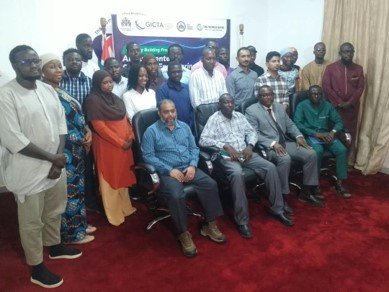
The opening ceremony, held at the GICTA Conference Room in Sukuta-Jabang, brought together government ICT professionals who will undergo intensive training in artificial intelligence (AI) and software engineering over the coming weeks.
Delivering the keynote address, GICTA Director General Abdou Karim Jallow said the initiative aligns with GICTA’s mandate to lead and coordinate government ICT projects, develop digital solutions, enforce ICT standards, and support innovation across public institutions.
He noted that the increasing adoption of artificial intelligence and emerging technologies requires a highly skilled workforce capable of designing, developing, integrating, and maintaining secure and sustainable digital systems.
“This initiative is particularly relevant to GICTA’s mandate under the West Africa Regional Digital Integration Program. Fulfilling this mandate requires a highly skilled technical workforce capable of developing and managing digital systems that support government service delivery,” Mr. Jallow said.
According to him, the training will provide participants with practical exposure to AI-assisted software development, requirements engineering, systems design, and application development.
Mr. Jallow expressed gratitude to the World Bank for financing the programme through WARDIP and commended the trainers for sharing their expertise with government ICT personnel.
“To our trainees, I challenge you to seize this opportunity and apply the knowledge and skills acquired to address the challenges facing government institutions,” he said.
The Director General described the programme as a long-term investment in human capital that will strengthen GICTA’s capacity to fulfill its mandate and advance The Gambia’s digital transformation agenda.
Speaking further, Mr. Jallow emphasized the importance of including government employees in capacity-building initiatives, noting that they are at the center of digital transformation and service delivery within ministries and departments.
He said the training is expected to equip participants with the knowledge and practical skills required to effectively apply artificial intelligence in software engineering and digital service development.
Among the expected outcomes of the programme, he said, are the development of advanced technical skills among ICT personnel and the creation of in-house government digital solutions, including a cabinet management system.
Mr. Jallow highlighted the need to develop such critical systems locally to ensure the protection of sensitive government information.
“The cabinet system contains some of the government’s most sensitive information. We do not want to depend entirely on external systems. Building the system locally will help safeguard government documents and strengthen data security,” he stated.
Also speaking at the event was Kawsu Barrow, Monitoring and Evaluation Representative of WARDIP, who said the workshop is closely aligned with the programme’s development objectives.
Mr. Barrow explained that WARDIP aims to increase broadband access and usage across participating countries while promoting the establishment of a single digital market in West Africa.
“Over the next two weeks, our ICT personnel will strengthen their digital skills, bridge existing knowledge gaps, and encourage innovation in digital platforms. This programme will lay the foundation for secure and interoperable digital solutions that can serve both The Gambia and the wider region,” he said.
The training programme is expected to play a key role in building a competent digital workforce capable of supporting public sector modernization and driving the country’s digital transformation efforts.