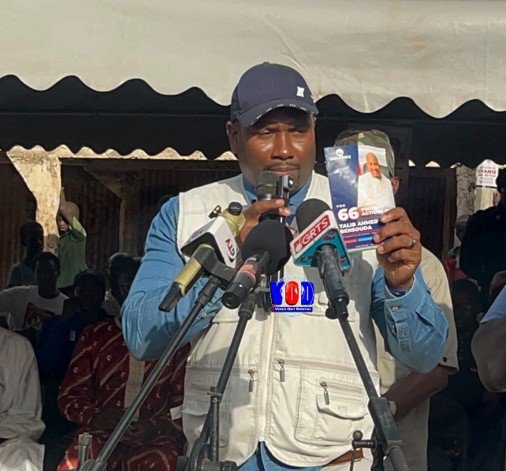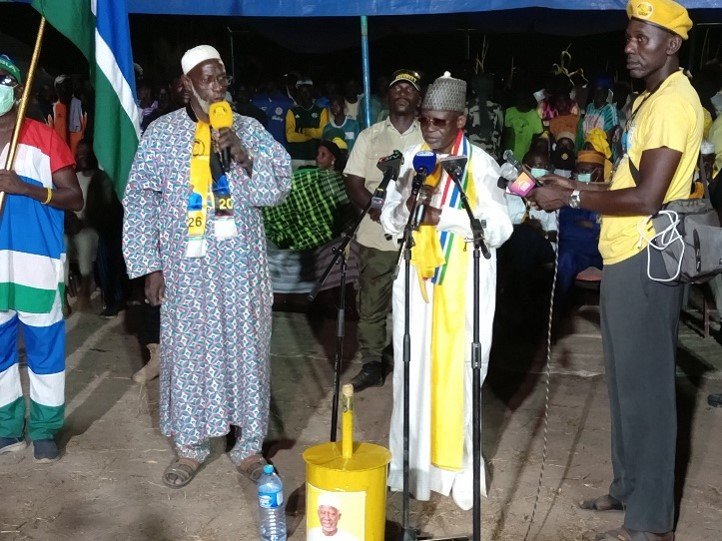
Bakary K. Badjie, National Assembly Member for Foni Bintang Karanai, has filed a suit at the High Court challenging the Independent Electoral Commission’s (IEC) decision to reject his nomination for the December 5 presidential election.
The action, filed through his lawyer, Muhamed Lamin Ceesay of Crown Chambers, seeks a court order directing the IEC to accept his nomination and permit him to contest the election.
The case was commenced by way of an originating summons pursuant to Section 26 of the 1997 Constitution, which guarantees the protection of political rights.
In the summons, Badjie is asking the court to determine whether the IEC’s refusal to accept his nomination amounted to an arbitrary and unreasonable restriction on his political rights. He is also seeking a determination on whether the decision violated the political participation rights of the registered voters who nominated him.
Badjie is seeking declarations that the Commission’s decision wrongfully denied him the opportunity to participate in the presidential election and frustrated the political rights of his nominators. He further seeks an order compelling the IEC to accept his nomination papers.
According to a supporting affidavit sworn by Badjie, he initially submitted 5,126 supporting signatures to the IEC on November 6, the official nomination day.
He stated that the Commission informed him on November 8 that he required an additional 2,950 signatures. However, an IEC publication issued a day later indicated that he needed 2,310 more signatures, with figures provided for six regions.
Badjie contends that the discrepancy between the two figures raised concerns regarding the transparency and consistency of the verification process.
The affidavit further states that he submitted an additional 2,620 signatures on November 11. After making enquiries the following day about whether further signatures were required, he was informed that the verification exercise was still ongoing.
According to Badjie, the IEC later published figures showing that he still required 1,195 signatures, including nine from Banjul and eight from Basse.
On November 14, he said his team submitted a final batch of 2,579 signatures. However, he alleges that at about 11:30 a.m., Chief Elections Officer Sambujang Njie informed them that the Commission would be unable to count the final batch because there was insufficient time to complete the exercise.
Later that day, the IEC announced during a press conference that Badjie’s nomination had been rejected. The Commission subsequently issued him a formal rejection letter, citing failure to satisfy the constitutional requirement relating to supporting signatures under Section 47(a) of the 1997 Constitution.
Badjie further stated that he immediately appealed the decision to the Commission but received no response.
His lawyer subsequently wrote two letters to the IEC. The first sought an expedited response to the appeal, while the second requested a list of rejected nominators and the reasons for their rejection, as well as a copy of the voters’ register for the 2026 election.
According to the affidavit, neither letter was acknowledged nor answered by the Commission.
A second supporting affidavit was sworn by Amie Jallow, Vice Chairperson of the Independent Movement for Bakary K. Badjie. She confirmed participating in the signature collection exercise and stated that three batches totaling 10,325 signatures were submitted to the IEC.
Jallow also corroborated Badjie’s claim that the Chief Elections Officer had indicated that the final batch would not be counted because the Commission lacked sufficient time to verify it.
The originating summons has been lodged with the Registrar of the High Court and is expected to be transmitted to the Chief Justice for the assignment of a judge and the scheduling of a hearing date.
The case is expected to test the legality of the IEC’s nomination verification process and determine whether the Commission’s actions were consistent with constitutional guarantees relating to political participation and electoral rights.