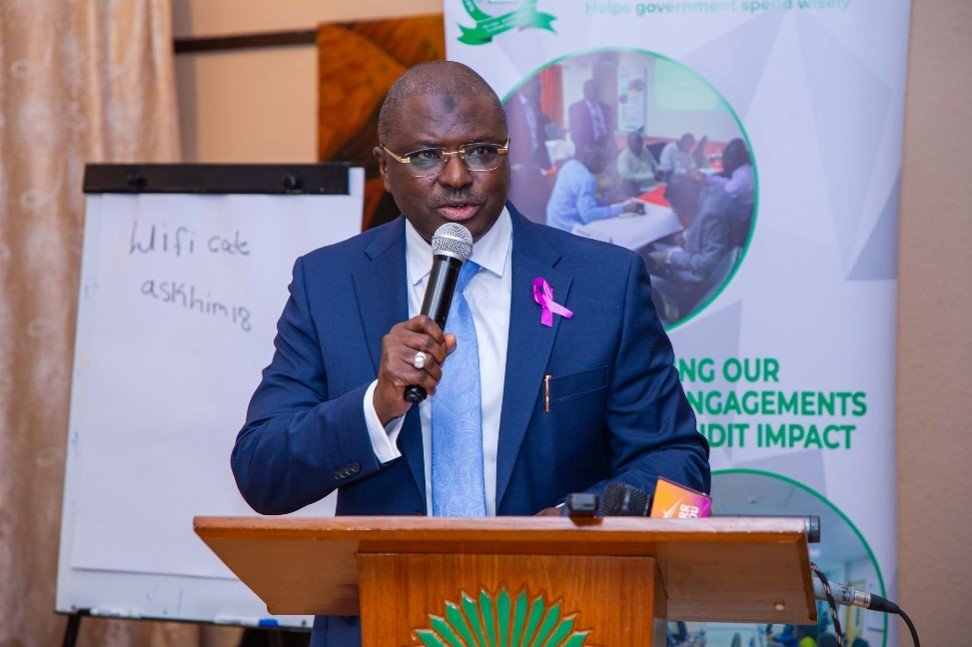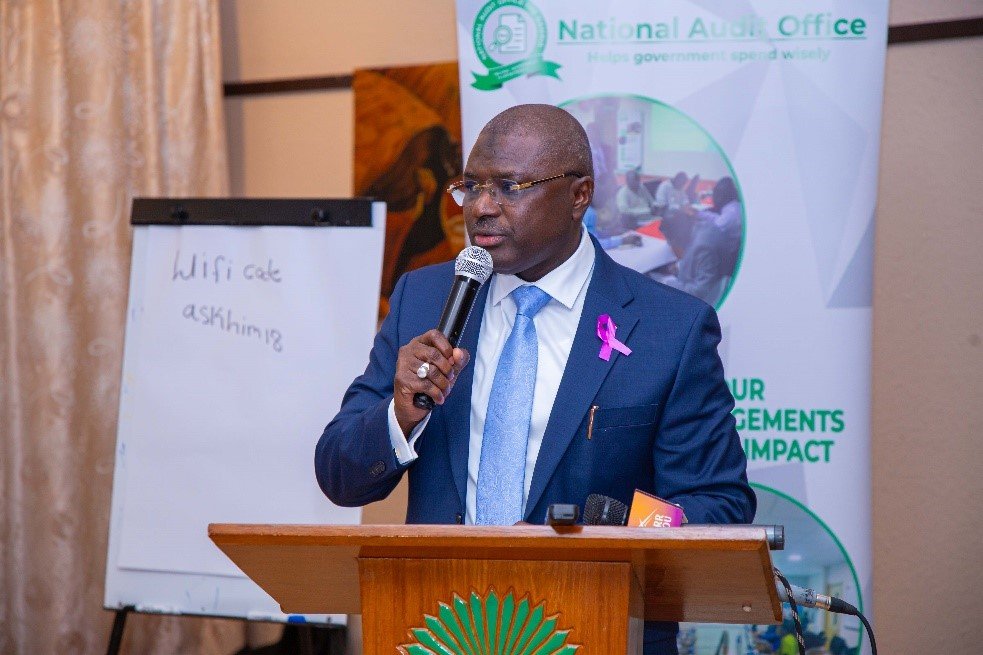
The Auditor General of The Gambia’s National Audit Office (NAO), Cherno Amadou Sowe, has underscored the importance of collaboration between the NAO and the media in strengthening transparency, accountability, and good governance. Speaking at an engagement with media practitioners on Wednesday at a local hotel in Kololi, Sowe highlighted the indispensable role of journalists in informing citizens, promoting accountability, and ensuring that public institutions are held responsible for the stewardship of public resources.
“In a democratic society, the media occupies a unique and indispensable position. It serves as a bridge between public institutions and citizens, bringing matters of public interest to the attention of the public and providing a platform through which citizens can engage with issues affecting their lives,” he said.
Sowe explained that the NAO, as the country’s Supreme Audit Institution, provides independent assurance on the management and use of public resources. Its audits cover financial compliance, performance, information technology, and other specialised areas, all aimed at strengthening accountability, improving public financial management, and enhancing service delivery.
He noted that while audit reports are submitted to the National Assembly to support parliamentary oversight, they are also made available to the public. This enables citizens, civil society organisations, and the media to understand how public resources are managed. However, he cautioned that audit findings are sometimes misunderstood or reported without sufficient context, leading to misconceptions.
“It is important to distinguish between audit findings, the conclusions drawn from those findings, and any recommendations made to address the underlying issues. An identified weakness does not automatically establish fraud or deliberate wrongdoing,” Sowe stressed, adding that recommendations are intended to improve systems, not to imply misconduct beyond the evidence presented.
The Auditor General welcomed scrutiny and critical questions from the media but urged for reporting that is accurate, balanced, and evidence-based. He emphasised that the NAO does not view the media merely as recipients of audit reports but as vital stakeholders in the accountability ecosystem.
“Through your reporting, citizens gain greater awareness of audit findings, public institutions are encouraged to respond to identified weaknesses, and issues requiring further attention receive the scrutiny they deserve,” he said.
Sowe acknowledged that the NAO has occasionally been the subject of negative publicity but reaffirmed the institution’s commitment to professionalism, independence, and integrity. He pointed to the office’s use of social media and its official website as part of efforts to keep the public informed, while stressing that communication must remain a two-way process.
He concluded by reiterating that promoting transparency and accountability is a shared responsibility requiring the collective efforts of public institutions, the National Assembly, the media, civil society organisations, development partners, and citizens. Quoting the International Organisation of Supreme Audit Institutions’ framework, he reminded participants that the true value of public sector auditing lies in improved accountability, better public services, and positive outcomes for citizens.
“With these remarks, it is my pleasure to declare the engagement with media reporters and editors on public sector auditing and audit findings reporting officially open,” Sowe said.