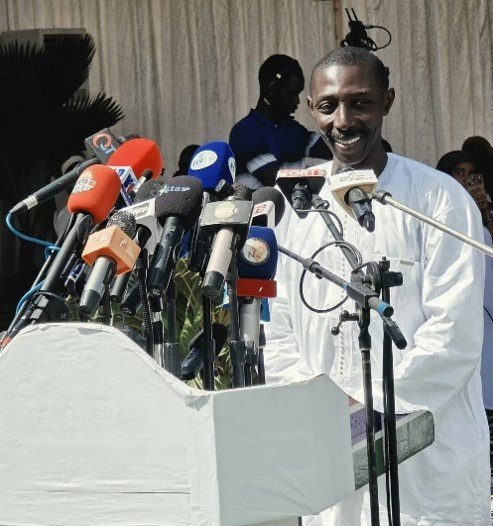
The leader of the People’s Alliance Party (PAP), Ebrima Tabora Manneh, has expressed concern over the pace of development in The Gambia, describing the country as backward despite its relatively small population.
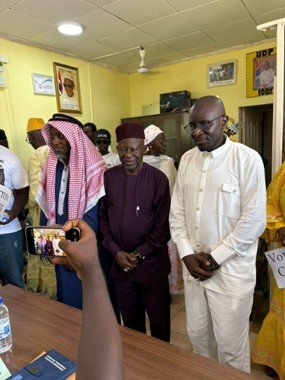
Speaking after submitting his nomination credentials to the Independent Electoral Commission (IEC), Manneh said The Gambia’s population of fewer than three million people should make development easier compared to many other countries.
“The Gambia is definitely a backward country, even if you compare it to other nations within Africa, not even European countries. We have a long way to go,” he said. “We have less than three million people. This country should be the easiest country to develop.”
The PAP leader argued that key sectors critical to national progress continue to face significant challenges. According to him, deficiencies in healthcare, education, employment and security have limited improvements in the living conditions of Gambians.
Manneh also linked the growing trend of irregular migration among young people to the lack of employment opportunities and economic prospects within the country.
“Our youth are going the back way. Any sector that you look at in this country is a failure, whether it is the health sector, education sector, employment or security,” he stated.
As part of his party’s agenda, Manneh reaffirmed his commitment to promoting indigenous businesses, saying local enterprise development is essential for achieving economic independence and creating opportunities for Gambians.
Commenting on his nomination, the PAP leader expressed confidence that the IEC would accept his credentials. He cited his previous experience during the 2021 presidential election, when his attempt to contest as an independent candidate was rejected because his party had not yet been registered.
He said the party had since fulfilled the necessary requirements and was fully prepared for the electoral process.
“We have faith in the system. We have faith in the personnel of the IEC,” Manneh noted.
Documents submitted to the electoral body included proof of citizenship, a voter’s card, a university degree, confirmation of the D1 million nomination deposit, an asset declaration, an income tax clearance certificate, the party manifesto and a campaign itinerary.
However, the IEC advised the party to ensure consistency in the use of its initials in official documents.