A new labour market assessment has revealed that nearly all graduates surveyed about 94 percent expressed interest in starting or expanding their own businesses, though access to finance remains a significant hurdle.
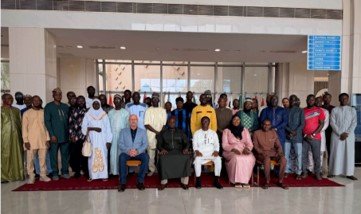
The findings were presented Friday during a one-day consultancy workshop organised by the Ministry of Higher Education, Research, Science and Technology (MoHERST) under the World Bank–funded RISE project. The event, held at the Sir Dawda Kairaba Jawara International Conference Center, focused on developing curricula for two Centres of Excellence in Technical and Vocational Education and Training (TVET).
Officials said the US$13 million project will establish centres dedicated to agribusiness in Ndemban Village, West Coast Region, and fisheries and aquaculture in Kombo South.
Presenting the assessment, Dr. Mamma Sawaneh noted that graduates showed strong interest in agribusiness, crop and livestock production, aquaculture, fisheries, food processing, and irrigation services. “Almost 94% of the graduates want to start or expand a business on their own,” he said, adding that limited access to finance was consistently identified as the main barrier.
Consultancy team leader Professor Marco Turco highlighted another challenge: nearly 45 percent of graduates remain unemployed. “This implies there is a systems problem, and systems can be designed right,” he remarked, stressing that the findings will guide the development of new TVET curricula.
Minister of Higher Education Professor Pierre Gomez said the programmes will be competency-based, focusing on practical skills, digital literacy, and entrepreneurship. “Our policy is to develop curricula that are competency-based, focusing on what graduates can do as well as what they know,” he explained.
Deputy Permanent Secretary Dr. Samba Sowe described the workshop as part of a sequential process beginning with labour market needs assessment, followed by curriculum and teaching methodology development. He said the initiative is aligned with the Gambia National Qualifications Framework to ensure training meets industry demands.
The ministry emphasised that the Centres of Excellence will support skills development in agribusiness, fisheries, and aquaculture, while addressing unemployment and fostering entrepreneurship among graduates