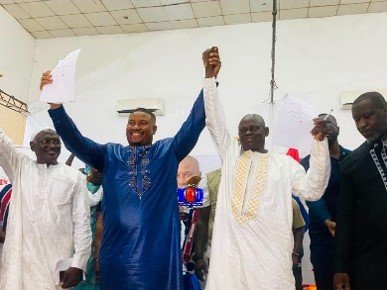
In the fevered run-up to the 2026 presidential election, Gambian political leaders have been busy staging signing ceremonies, flashing smiles, and declaring unity. But beneath the handshakes and photo ops, the real story lies in the documents themselves the coalition agreements and memorandum of understanding that will shape the country’s political future.
These agreements are not mere formalities. They are binding political contracts that spell out who get to lead, what policies will be prioritized, and how parties will share power. And while the rhetoric is lofty, the details reveal both ambitions and contradictions.
Coalition 2026: A Promise of Renewal
Talib Ahmed Bensouda’s coalition pledges a “new dawn” zero tolerance for crime and tribalism, alongside bold plans for youth employment and energy security. The language is aspirational, but the challenge is practical: can disparate parties truly enforce discipline across their ranks while delivering jobs and electricity to every Gambian household?
NPP–GDC Alliance: Continuity in Power
President Adama Barrow’s alliance with the GDC is framed as a stabilizing force. It promises anti-corruption reforms, agricultural transformation, and rural development. Yet, critics argue this is less about reform and more about entrenching incumbency. The agreement’s emphasis on continuity raises the question: is this a roadmap for progress, or a shield against political vulnerability?
UNITE–NUP Pact: The Opposition’s Three Cs
The opposition’s alliance is built around three urgent priorities: cost of living, crime, and corruption. It is a sharp, populist message designed to resonate with ordinary Gambians. But the simplicity of the “Three Cs” risks being its weakness, slogans alone cannot substitute for detailed governance strategies.
The Bigger Picture: What these agreements reveal is a battle of narratives. One coalition promises renewal and unity. Another insists on continuity and stability. The opposition offers urgency and populism.
Yet, all three converge on the same themes: crime, corruption, jobs, and energy. This convergence suggests that Gambian voters are being courted with overlapping promises, leaving the real contest not in policy differences but in credibility and delivery.
The signing ceremonies may dazzle, but Gambians should look past the spectacle. These agreements are political contracts with the people. If honored, they could reshape governance. If broken, they will deepen cynicism. The ink on these documents is fresh, but the test will come when promises meet reality.