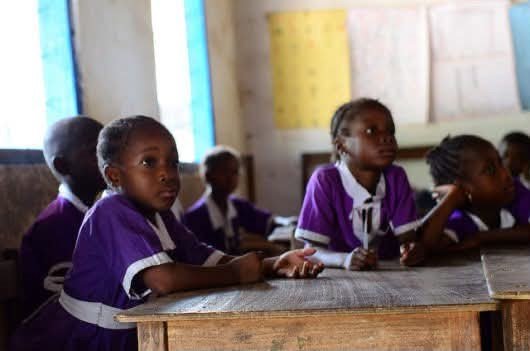
The Government of The Gambia is set to roll out teaching materials in seven national languages for Early Childhood Development (ECD) and Grade 1 pupils, according to Information Minister Dr. Ismaila Ceesay.
Speaking on Coffee Time with Peter Gomez, Dr. Ceesay explained that the initiative will incorporate Jola, Soninke, Mandinka, Fula, Wollof, Serer, and Manjago alongside English at the foundational level of education.
Dr. Ceesay said the policy is grounded in evidence that children achieve stronger learning outcomes when taught in their mother tongue during their early years. “We are adopting a localized approach that reflects the dominant language spoken in each community,” he noted.
Under the plan, schools in predominantly Soninke-speaking areas, for example, will use Soninke as the language of instruction. Pupils may also be grouped according to their language backgrounds and assigned to teachers proficient in the relevant national language.
The initiative aims to address challenges faced by children who begin their education in English despite speaking a different language at home. Dr. Ceesay dismissed concerns that the policy could fuel ethnic divisions, stressing that it will be limited to foundational education.
He added that the government intends to use a data-driven approach to guide implementation, particularly in linguistically diverse communities.
“This is about improving education outcomes, not dividing people,” Dr. Ceesay emphasised