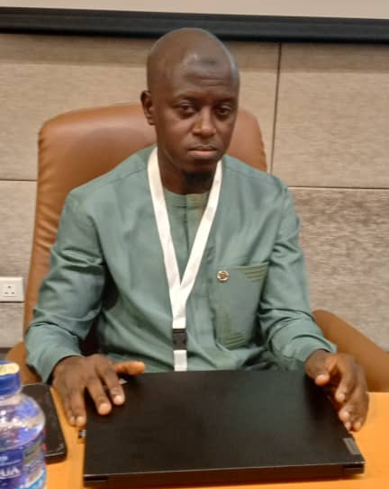
The Director of Competition at the Gambia Competition and Consumer Protection Commission (GCCPC), Baboucarr Ceesay, has given a succinct and enlightening explanation of how the GCCPC fights unfair competition in the Gambian market and business environment.
Delivering a keynote presentation during the ECOWAS Regional Competition Authority (ERCA) training for West African economic journalists in Banjul on 9 November 202, Mr Ceesay said When prices suddenly jump in the market, when every shop sells rice at the same price, or when a big importer suddenly drops prices only to raise them again, it is rarely an accident, but often “a cartel at work”.
“We have one competition commission in our national jurisdiction and also in the ECOWAS common market,” he referred to the GCCPC. “Our core functions are to investigate cartelised behaviours. Cartels range from price fixing, market sharing, and collusive bidding.”
He warned that business cartels are as dangerous as drug cartels – “even worse”.
“Largely, governments do not control prices,” he clarified, saying: “They leave prices in the hands of demand and supply… So, what cartels do is sometimes they come together to fix those prices, agree among themselves on what these prices should be in order to avoid competition.”
GCCPC does not wait for complaints alone, he said. It investigates classic cartel behaviours, which are price fixing, market sharing and bid rigging. Price fixing occurs when competitors agree instead of competing on price, he explained.
For market sharing, he gave an instance, saying two optical providers, one in Upper River Region and the other in North Bank Region, agreed: “You stay in the northern region, whilst I stay in the upper,” he cited.
As regards bid rigging, he says this occurs when governments invite sealed bids to get the best price for hospitals, roads and cars. Cartels defeat it by agreeing in advance who will win. Ceesay illustrated: a car worth D1.5 million — one bidder submits D2 million, the other D4 million. Government thinks D2 million is the best, not knowing it could have got it for D1.5 million. Or the winner subcontracts the loser.
On abuse of dominance, Ceesay says a firm is dominant in The Gambia if it controls at least 30% of the market; three or fewer firms with 70% are jointly dominant. Under ECOWAS rules, 40% is dominant, 70% for one firm is monopoly, he said, adding that abuse takes many forms, such as refusal to deal, tying and bundling, predatory pricing, and hoarding.
Ceesay says GCCPC’s secret weapon to track or unearth all these malpractices is market surveillance and market studies
This is where The Gambia stands out, and where other ECOWAS countries should learn, he advised, saying: “We have a programme called Market Surveillance. We initiated this in 2013… Every two weeks, there is a team that goes to the major markets to look for prices and availability. Every three months, there is a team that goes to the regions.”
He stated further: “If you look at anti-competitive conduct as normal business conduct, you’re joking. They can bring governments down, they can start wars… Imagine, all the rice importers agree that by November, nobody is importing rice. And there is no rice in the country. We don’t have to go for elections.”
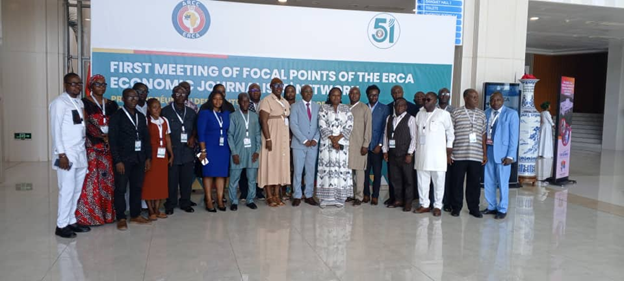
That is why GCCPC works hand-in-hand with ERCA, he pointed out, harmonising Gambian law with ECOWAS rules, facilitating ECOWAS investigations, enforcing ECOWAS decisions, and conducting joint cross-border studies on cement and digital markets, “the first of its kind in Africa”.
The GCCPC director’s final plea to journalists: “Do not wait to prove anti-competitive conduct to come and report… Send us the signal. It is our job to prove it.”
He thanked ERCA for organising this vital training, and commended Serge Bouadio and other ERCA staff who have been on the ground in The Gambia to ensure the training took place with maximum success.