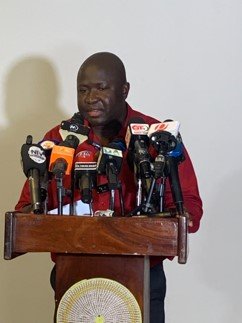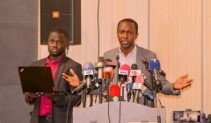
The Deputy Director of NAWEC, Sampo Ceesay, has assured Gambians that the ongoing electricity crisis is not a system failure but rather a situational challenge linked to maintenance and external factors.
Ceesay explained that NAWEC is currently undergoing massive maintenance on its thermal plants, which has temporarily reduced generation capacity. He noted that the ability to substitute megawatts is proving difficult, compounded by global fuel price hikes and delays in spare parts due to the impact of the war in Iran.
“This is not the first time we are embarking on massive maintenance. We normally seek help from Senegal or Guinea to substitute a certain amount of megawatts to prevent situations like this,” he said.
According to him, NAWEC has already spent more than $1 million in the past 12 months on rehabilitation and expects to spend an additional $2 million over the next year to boost energy security.
Heavy Reliance on Imported Fuels
Mr Ceesay lamented that The Gambia is the only African country without primary energy resources such as oil, coal, or diesel, making the nation heavily dependent on imports. He emphasised that the country’s only natural energy resource is the sun, which is why NAWEC has invested in the Jambur solar plant, a 23-megawatt facility.
Roadmap for Universal Access
He highlighted that access to electricity remains a cornerstone of the national energy roadmap. NAWEC aims to achieve universal access, ensuring that nearly every household is connected. Currently, about 90% of Gambian households have electricity, with 420,000 active customers, most of whom use prepaid meters.
Grid modernization has also been prioritised, with new transformers installed in Medina, Brikama, Brusubi, and near the airport to improve service quality.
Regional Cooperation and Future Projects
Ceesay clarified that while The Gambia owes between $10–20 million in energy reconciliations with Senegal and Guinea, this is a normal market process and not a sign of default. He stressed that the OMVG interconnection line is jointly owned by The Gambia, Senegal, Guinea Bissau, and Guinea-Conakry, allowing shared access to hydro resources.
He revealed that the government has launched a tender for a new 50-megawatt plant, with contracts expected to be awarded by the end of June. Since 2017, NAWEC has added more than 50 megawatts through two new power stations, and the company continues to invest in long-term solutions to stabilize tariffs and ensure affordable electricity.
Assurances to the Public
Ceesay concluded by assuring Gambians that the crisis is temporary and expected to ease by mid-June. He emphasised that NAWEC has spent over $3 million on maintenance in the past year as part of a rapid recovery programme aimed at restoring 50 megawatts of capacity.
“The electricity crisis is not about the failure of NAWEC but about maintenance challenges. This situation is just a glitch, not a system failure, and we are addressing it,” he said.