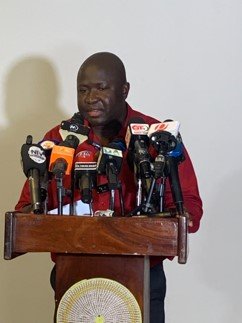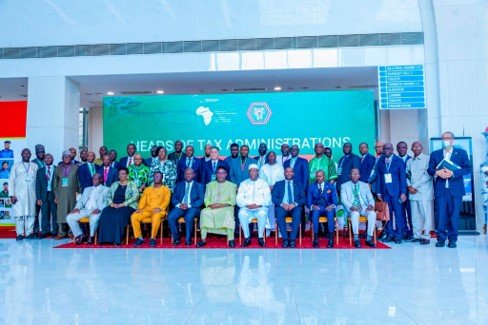
“Africa’s development cannot be outsourced. Sustainable development must ultimately be financed through domestic resources mobilized by strong and effective institutions.” With these words, Mr. Yankuba Darboe, Commissioner General of the Gambia Revenue Authority (GRA), set the tone for the opening of the 7th Heads of Tax Administrations Master Class at the Sir Dawda Kairaba Jawara International Conference Centre in Bijilo on Wednesday, July 22, 2026.
Mr. Darboe underscored the central role of domestic revenue mobilization in achieving Africa’s development ambitions. He highlighted reforms undertaken by the GRA including digital innovations, compliance strategies, and institutional strengthening many of which were inspired by lessons shared among peers through the African Tax Administration Forum (ATAF).
“Technology can modernize systems, but leadership sustains reform,” Mr. Darboe reminded attendees, stressing the need for leaders who can inspire, manage change, strengthen accountability, and build institutions capable of delivering lasting impact.
The opening ceremony drew a distinguished audience including Vice President H.E. Mohammed B.S. Jallow; Hon. Seedy K. M. Keita, Minister of Finance and Economic Affairs; Hon. Pierre Gomez, Minister of Higher Education, Research, Science and Technology; Dr. Johnstone Makhubu, ATAF Chairperson and Commissioner of the South African Revenue Service (SARS); Ms. Mary Baine, ATAF Executive Secretary; and Heads of Tax Administrations from across Africa.
In her remarks, ATAF Executive Secretary Ms. Mary Baine reflected on the opportunities and challenges facing domestic resource mobilization. While Africa’s tax revenue has more than quadrupled over the past two decades, she noted that tax revenue as a share of GDP has declined, as economies have grown faster than countries’ ability to tax them.
Citing the African Development Bank’s 2026 African Economic Outlook, she highlighted that Africa could unlock up to USD 1.43 trillion in additional annual financing, including nearly USD 469 billion from tax systems alone. Importantly, she stressed that this revenue is recoverable not by raising statutory tax rates, but by converging on the administration standards of stronger-performing peers. “It is an administration dividend, not a tax increase,” she said.
Ms. Baine drew on examples from Rwanda, Kenya, and Morocco, noting that digital tools deliver sustainable gains only when embedded in broader governance reform and sustained political commitment. “Technology alone collects nothing. Leadership does,” she emphasized.
She further observed that the hardest constraints facing tax administrations are often political rather than technical, calling on Africa’s political leadership to place domestic resource mobilization at the heart of the African Union’s agenda. She also underscored the importance of continued African unity in negotiations on the United Nations Framework Convention on International Tax Cooperation.
Addressing Commissioners General, Ms. Baine urged participants to leave Banjul with one reform to accelerate, one capability to build, one leader to develop, and one peer who will hold them accountable.
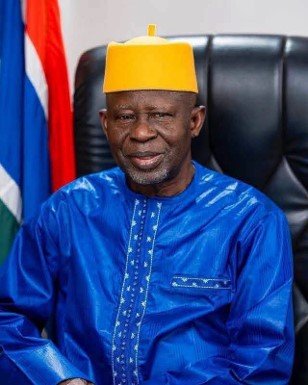
Vice President Muhammad B. S. Jallow reaffirmed The Gambia’s commitment to boosting domestic revenue mobilization, recognizing the GRA’s digital reforms under Commissioner General Darboe, and commending ATAF for its continued support to African tax administrations.
The Master Class continues ATAF’s tradition of fostering collaboration among tax leaders, equipping them with the tools and insights needed to strengthen revenue systems across the continent.
The Chairman of the African Tax Administration Forum (ATAF), Dr. Ngobani Johnstone Makhubu, has called for a renewed commitment to steward leadership and the spirit of Ubuntu as guiding principles for Africa’s future. Speaking at a gathering of commissioners general and heads of tax administrations, Dr. Makhubu emphasized that leadership is not about authority, but about responsibility, service, and stewardship.
“Ubuntu teaches us that I am because we are,” he said, stressing that African leaders must embrace unity beyond borders and languages. “We are African, we serve Africa, and the future we are called upon is to build an African future that is sustainable. Our decisions affect the lives of more than 1.6 billion Africans.”
Dr. Makhubu underscored that tax administration is not merely about revenue collection, but about people, trust, and the well-being of citizens. He noted that every school built, hospital funded, road maintained, and opportunity created depends on effective leadership in tax administration. “Important work keeps institutions functioning, but significant work changes societies, strengthens nations, and shapes the future,” he remarked.
Central to his message was the importance of domestic resource mobilization (DRM), which he described as Africa’s delivery anchor. DRM, he explained, enables governments to finance development, strengthen fiscal sovereignty, reduce dependency on external donors, and reinforce the social contract between states and citizens. “Good tax policy and good tax administration cannot be separated,” he cautioned, adding that policy and administration are “two sides of the same fiscal coin.”
Dr. Makhubu concluded with a call to action: “We can administer systems, or we can transform societies. We can collect revenue, or we can help build nations. We can manage institutions, or we can decide to leave a legacy.”
The Gambia has recorded significant progress in domestic resource mobilization, with its tax-to-GDP ratio rising from 9 percent in 2022 to 13 percent today, according to Finance and Economic Affairs Minister Seedy Keita.
Finance Minister credited the reforms to strong leadership and improved compliance measures. He noted that the achievement was made without raising tax rates, relying instead on digitalization and efficient administration.
Hon. Keita highlighted the role of President Adama Barrow, describing him as the “number one tax collector” for his hands-on involvement in monitoring monthly revenue performance.