Henry Alfred Kissinger was an American diplomat, political scientist, and politician. He served as the 7th national security advisor from 1969 to 1975, followed by being the 56th United States secretary of state from 1973 to 1977. He served under presidents Richard Nixon and Gerald Ford.
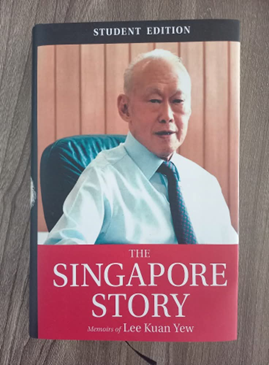
And Lee Kuan Yew, born in 1923 and died in 2015, was the founding father of modern Singapore and served as its first prime minister for over three decades, from 1959 to 1990. He is widely credited with transforming Singapore from a resource-poor, developing colonial outpost into one of the world’s most prosperous, efficient, and stable nations – a journey often described as “from third world to first”.
When Lee Kuan Yew died, Henry Kissinger wrote:
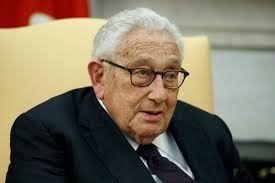
Henry Alfred Kissinger
Lee Kuan Yew was a great man. And he was a close personal friend, a fact that I consider one of the great blessings of my life. A world needing to distill order from incipient chaos will miss his leadership.
Lee emerged onto the international stage as the founding father of the state of Singapore, then a city of about 1 million. He developed into a world statesman who acted as a kind of conscience to leaders around the globe.
Fate initially seemed not to have provided him a canvas on which to achieve more than modest local success. In the first phase of decolonization, Singapore emerged as a part of Malaya [mainland portion of modern-day Malaysia]. It was cut loose because of tensions between Singapore’s largely Chinese population and the Malay majority and, above all, to teach the fractious city a lesson of dependency. Malaya undoubtedly expected that reality would cure Singapore of its independent spirit.
But great men become such through visions beyond material calculations. Lee defied conventional wisdom by opting for statehood. The choice reflected a deep faith in the virtues of his people. He asserted that a city located on a sandbar with nary an economic resource to draw upon, and whose major industry as a colonial naval base had disappeared, could nevertheless thrive and achieve international stature by building on its principal asset: the intelligence, industry and dedication of its people.
A great leader takes his or her society from where it is to where it has never been — indeed, where it as yet cannot imagine being. By insisting on quality education, by suppressing corruption and by basing governance on merit, Lee and his colleagues raised the annual per capita income of their population from $500 at the time of independence in 1965 to roughly $55,000 today. In a generation, Singapore became an international financial center, the leading intellectual metropolis of Southeast Asia, the location of the region’s major hospitals and a favored site for conferences on international affairs. It did so by adhering to an extraordinary pragmatism: by opening careers to the best talents and encouraging them to adopt the best practices from all over the world.
Superior performance was one component of that achievement. Superior leadership was even more important. As the decades went by, it was moving — and inspirational — to see Lee, in material terms the mayor of a medium-size city, bestride the international scene as a mentor of global strategic order. A visit by Lee to Washington was a kind of national event. A presidential conversation was nearly automatic; eminent members of the Cabinet and Congress would seek meetings. They did so not to hear of Singapore’s national problems; Lee rarely, if ever, lobbied policymakers for assistance. His theme was the indispensable U.S. contribution to the defense and growth of a peaceful world. His interlocutors attended not to be petitioned but to learn from one of the truly profound global thinkers of our time.