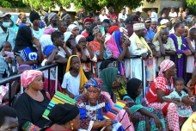
When President Adama Barrow inaugurated the Banni–Salikene–Njaba Kunda Road and launched the Lot 6 Roads Project in the North Bank Region, the applause wasn’t just for the asphalt—it was for the transformation it promises in everyday life.
Farmers See New Horizons: For decades, farmers in Njaba Kunda struggled to transport groundnuts and vegetables to markets. Lamin Ceesay, a local farmer, explained: “Before, trucks would break down on the old road, and we lost money when produce spoiled. Now, we can reach Kerewan and even Banjul faster. This road is our lifeline.”
Mothers and Children: Parents are equally optimistic. Fatoumata Jaiteh, a mother of three, shared: “My children used to walk long distances to school. With this road, they can get there safely and on time. It also means we can reach the health centre quickly when someone is sick.”
Traders and Small Businesses: Local traders see opportunity in the improved connectivity. Ebrima Bah, who runs a small shop in Salikene, said: “Suppliers can now deliver goods without delays. I expect my business to grow because customers from nearby villages can reach us more easily.”
Youth and Employment: Young people are hopeful about jobs. Mariama Sanyang, a recent graduate, noted: “Construction itself created work, but the real benefit is long-term. Better roads mean more businesses, more visitors, and more chances for us to find employment.”
A Shared Vision: These voices echo the government’s Connect Gambia Initiative, which aims to expand rural connectivity and integrate communities into national development. As National Road Authority (NRA) Managing Director Sulayman Sumareh Janneh emphasised, roads are more than infrastructure they are bridges to opportunity