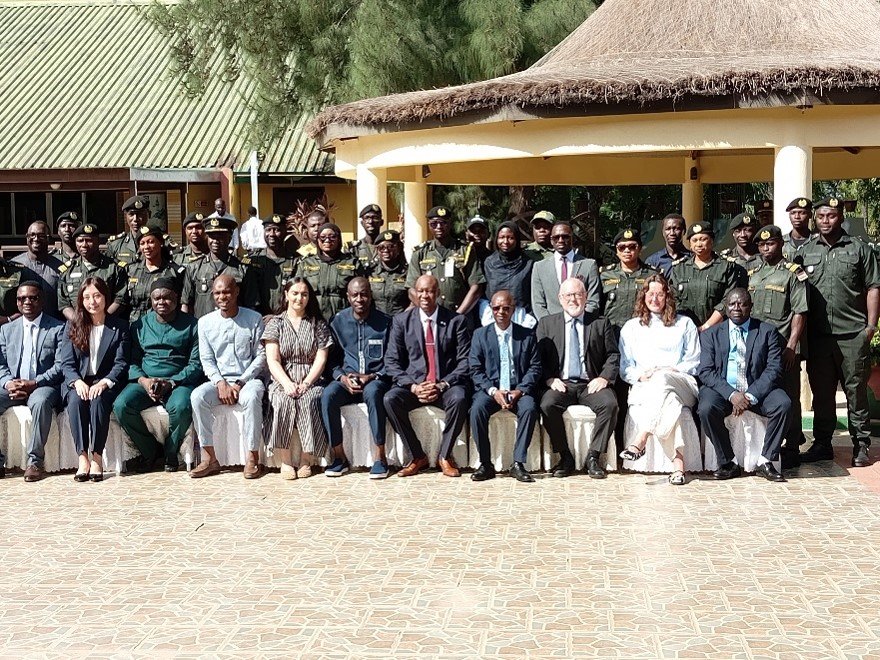
The Gambia Revenue Authority (GRA), in partnership with the World Customs Organization (WCO), has commenced the second phase of an advanced Post-Clearance Audit (PCA) capacity-building programme aimed at strengthening customs compliance, enhancing revenue collection, and aligning the country’s audit framework with international best practices.
Speaking at the opening of the workshop, GRA Commissioner General Yankuba Darboe, welcomed the WCO delegation and expressed appreciation for the organization’s continued technical support to the Authority.
The programme follows an extensive gap analysis conducted jointly by WCO experts and GRA officials through on-site engagements and a series of virtual consultations involving the Authority’s Post-Clearance Audit and Legal Teams.
According to Mr. Darboe, the primary objective of the exercise is to review, amend, and modernize the existing PCA Regulations and Manual to ensure they adequately respond to the operational needs of the Post-Clearance Audit Unit while reflecting internationally recognised standards and best practices.
He noted that the revised regulations and manual are expected to provide a stronger regulatory and operational framework for the Unit, improve the efficiency and effectiveness of audit operations, strengthen compliance levels, and boost domestic revenue mobilisation.
Highlighting the achievements of the Post-Clearance Audit Unit, the Commissioner General revealed that revenue recovery increased significantly from approximately D15 million in 2023 to about D27 million in 2025, underscoring the Unit’s growing contribution to government revenue generation.
He further stated that the Unit has made substantial progress in strengthening audit procedures, improving risk-based audit selection methods, and fostering stronger cooperation with the trading community. The Authority also recorded notable improvements in importer compliance levels between 2024 and 2025, demonstrating the effectiveness of its audit interventions and efforts to promote voluntary compliance.
“The work of the Post-Clearance Audit Unit remains critical to achieving two key objectives: facilitating international trade and protecting government revenue,” Mr. Darboe said.
The Commissioner General also acknowledged the support provided by development partners and international institutions, including the African Development Bank (AfDB), the International Monetary Fund (IMF), and the World Customs Organization, in building the Unit’s capacity through technical assistance and training opportunities.
Since becoming fully operational, the Unit has successfully conducted audits on more than **60 major importers** from 2023 to date, reflecting its growing operational capacity and effectiveness in executing its mandate.
Mr. Darboe also highlighted a major professional achievement by the Unit in 2024 when one of its officers attained WCO Fellowship recognition, a milestone he described as evidence of the Authority’s commitment to developing technical expertise and strengthening institutional capacity in customs administration.
He encouraged participants to actively engage in the workshop and contribute their experiences and expertise toward producing practical and effective regulatory instruments.
“We must ensure that the resulting Regulations and Manual are not merely documents on paper but practical tools that guide daily operations, promote consistency in audit practices, strengthen accountability, and improve overall performance,” he said.
The Commissioner General emphasised that the success of Post-Clearance Audit depends not only on a sound regulatory framework but also on the ability of officers to implement it professionally, consistently, and effectively.
He concluded by expressing confidence that the collective expertise of the WCO delegation and GRA officials would result in meaningful and sustainable outcomes that further strengthen the Post-Clearance Audit function in The Gambia.
The Commissioner of Customs at the Gambia Revenue Authority (GRA), Alhagie Mbye, has commended the impressive achievements of the Post-Clearance Audit (PCA) Unit, noting significant improvements in revenue recovery, trade compliance, and institutional capacity.
Mr. Mbye said the exercise builds on a gap analysis conducted by experts from the World Customs Organization (WCO) in collaboration with GRA staff through on-site engagements and weekly virtual sessions.
According to the Customs Commissioner, the primary objective of the workshop is to review, amend and strengthen the existing PCA Regulations and Manual to ensure they effectively address the operational needs of the Post-Clearance Audit Unit while aligning with international standards and best practices.
Representatives from the United Kingdom’s HM Revenue and Customs (HMRC) and the World Customs Organization (WCO) have praised The Gambia for the significant progress it has made in implementing trade facilitation reforms aimed at improving customs efficiency, boosting revenue collection, and supporting legitimate trade.
HMRC representative Helena Kern said the visit was intended to assess the impact of the UK-supported Accelerate Trade Facilitation Programme and gain a better understanding of achievements recorded in key technical areas.
Kern noted that HMRC oversees the United Kingdom’s implementation of the World Trade Organization’s Trade Facilitation Agreement and works with international partners to support customs modernization in developing countries. She commended the strong partnership between the Gambia Revenue Authority (GRA), the WCO, and UN Trade and Development.
Describing The Gambia as one of the programme’s trusted partner countries, Kern highlighted progress in the implementation of the Authorized Economic Operator (AEO) Programme and Post-Clearance Audit (PCA) systems.
“The Accelerate Trade Facilitation Programme is now in its eleventh year, and we have secured funding through 2029,” she said. “We are excited to learn more about the achievements made so far and hear directly from stakeholders about the impact of the support provided.”
Also addressing participants, David Tanenbaum, Programme Manager and Head of the WCO Accelerate Trade Facilitation Programme, underscored the long-standing cooperation between the WCO and the GRA, which began in 2021 during the COVID-19 pandemic.
According to Tanenbaum, the partnership has since expanded to include coordinated border management, time-release studies, performance measurement initiatives, and the development of AEO regulations and operational guidelines. He disclosed that an updated draft of the AEO framework has recently been submitted as part of ongoing efforts to strengthen customs procedures.
He said the reforms are already yielding results by reducing duplication of information, improving coordination among border agencies, and strengthening performance measurement mechanisms.
“These improvements make customs officers’ jobs easier while helping traders move their goods faster and more efficiently,” Tanenbaum said.
A major focus of the current mission is the enhancement of **Post-Clearance Audit (PCA), a customs tool that allows authorities to verify compliance after goods have been released while facilitating trade and protecting government revenue.
Tanenbaum revealed that a recent diagnostic mission produced a draft PCA Enhancement Action Plan containing 31 recommendations and 74 remedial actions to be implemented between 2026 and 2029.
He added that WCO experts and GRA officials have spent the past seven weeks developing draft PCA regulations and an operational manual, both of which will be reviewed and refined during the ongoing mission.
The WCO official commended the GRA’s leadership and commitment throughout the reform process, stressing that local ownership remains critical to the successful implementation of customs modernization initiatives.
The mission is expected to enable customs officials, members of the National Trade Facilitation Committee, and development partners to assess progress, strengthen technical capacity, and determine the next steps in advancing trade facilitation reforms in The Gambia.
The Accelerate Trade Facilitation Programme, funded by the UK Government through HMRC and implemented by the WCO, seeks to support partner countries in modernizing customs operations, improving border management, and fostering a more efficient environment for international trade.