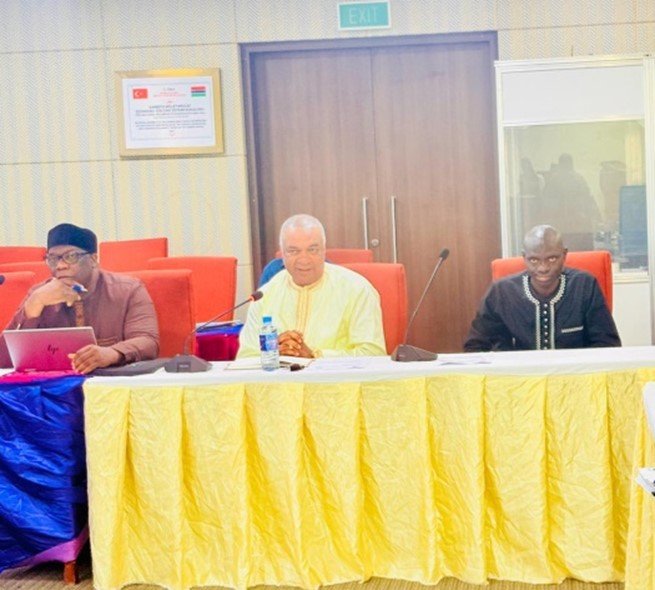
Members of the National Assembly’s Finance and Public Accounts Committee (FPAC) on Monday questioned officials of the National Accreditation and Quality Assurance Authority over a delayed D195,000 software project and the authority’s continued investment of surplus public funds without what lawmakers described as clear approval from the Ministry of Finance.
Appearing before FPAC to present its 2023 and 2024 audited financial statements, NAQAA management came under sustained scrutiny over payments made to a software vendor despite the system remaining incomplete for years.
Committee members raised concerns that the authority had continued paying annual hosting and maintenance fees estimated at over D120,000 even while the software was not operational.
Responding to lawmakers, NAQAA officials admitted the project suffered years of delays but insisted the system is now fully functional and already being used by universities and tertiary institutions to submit educational data online.
The authority explained that the project, which started around 2020, was affected by staff changes, poor handover processes and repeated technical problems discovered during user testing.
“You know software issues – when departments started using it, there were complaints and technical issues. So we had to go back and forth with the vendor,” one official told the committee.
FPAC members, however, maintained that the authority exposed itself to unnecessary financial losses by continuing to pay for a system that was not yet delivering services.
“What we are saying is that you are paying for something that was not making any use for you,” one lawmaker argued during the hearing.
The committee also questioned the legality of NAQAA’s investment of surplus funds into treasury bills and fixed deposits, arguing that such funds should first receive approval from the Ministry of Finance under the Public Finance Act.
NAQAA defended the practice, saying the investments were approved by its governing council and were intended to generate additional income for the authority.
Officials further argued that the funds invested were internally generated revenues from accreditation fees, registration charges and facility rentals rather than levy collections alone.
The authority disclosed that part of the funds had initially been reserved for the construction of an assessment centre after attempts to secure external financing failed.
Lawmakers nonetheless insisted that all extra-budgetary funds must be properly reported and approved by the Ministry of Finance before investment decisions are made.
FPAC urged the authority to strengthen its governance systems, improve internal audit reporting and ensure future contracts contain enforceable timelines and penalties for non-performance.
The hearing ended with NAQAA acknowledging shortcomings in the handling of the software project, describing it as “a lesson learned” for future management decisions.