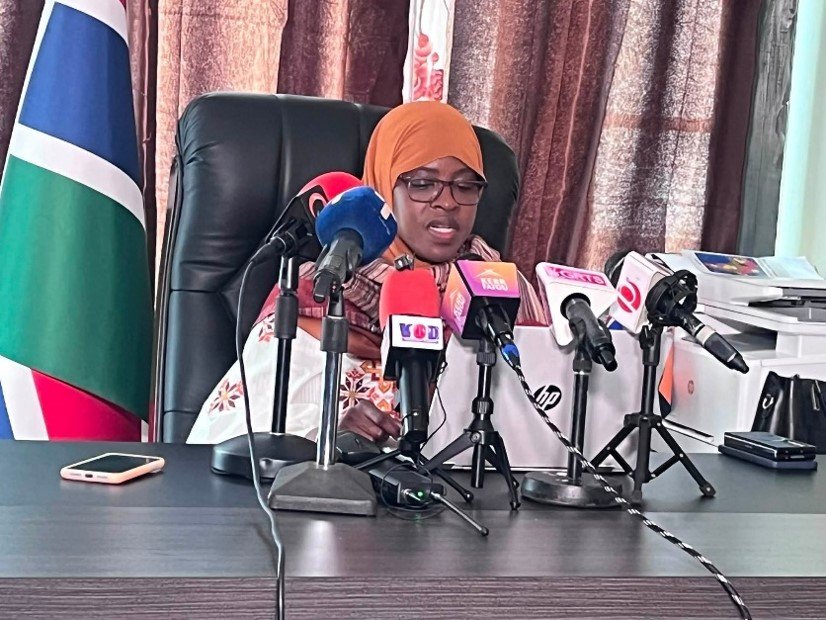
The Ministry of Basic and Secondary Education (MoBSE) has unveiled the official performance analysis of the 2026 West African Senior School Certificate Examination (WASSCE), painting a vivid picture of both progress and persistent challenges in Gambian secondary education.
The Rise of Female Leadership: This year’s results highlight a powerful trend: female students are leading the charge in Gambian education. Out of nearly 20,000 processed candidates, girls made up 63.62% of entries, and they dominated the benchmark for higher-level entry qualifications, accounting for 57.66% of the top achievers. This surge underscores the nation’s commitment to female empowerment and the growing role of women in shaping the country’s academic future.
Literacy and Numeracy: The Toughest Hurdles While science and technical subjects showed resilience, the core subjects of English and Mathematics remain the toughest barriers. Only 26.17% of candidates earned Credits in English, and a mere 9.18% achieved Credits in Mathematics. These figures reveal the urgent need for reforms in foundational literacy and numeracy, areas MoBSE has already pledged to strengthen through teacher development and structural reforms.
Science and Technical Strengths: The sciences shone brightly: Chemistry: 56.13% Credit rate, Biology: 49.33% and Physics: 36.48%.
Meanwhile, technical and vocational disciplines proved their worth: Auto Mechanics led with a remarkable 75.43% Credit rate. Other fields like Woodwork (46.98%) and Technical Drawing (34.52%) demonstrated solid outcomes, reinforcing the importance of practical skills in national development.
Absenteeism and the Zero-Credit Cohort: A striking 7,212 candidates fell into the zero-credit category, but the story is more complex than outright failure. Over half of them actually earned passes (D7–E8), while others were hindered by absenteeism. Only 20.74% truly failed all subjects. This nuance highlights that attendance, not ability, is often the decisive factor in student outcomes.
School Rankings: Champions of Excellence: At the top of the national standings, Mansa Colley Bojang Senior Secondary School emerged as the undisputed leader, with 97.04% of its candidates meeting the benchmark and an average of 8.75 credits per student. Close behind, Yunus English School Annex (Jamwelly) secured second place with a strong 77.78% pass rate.
Public and grant-aided schools dominated the top 25, claiming 16 spots, while private schools secured nine. Heavyweights like Masroor SSS and Nusrat SSS produced the largest numbers of university-eligible students, each with 256 qualifiers, cementing their reputations as academic powerhouses.
Looking Ahead: The 2026 WASSCE results tell a story of resilience, promise, and areas needing urgent attention. With strong performances in sciences and technical subjects, and with female students driving national success, the foundation is solid. Yet, the low pass rates in English and Mathematics remind us that the journey is far from over.
MoBSE’s commitment to reforms strengthening literacy, numeracy, and teacher support signals hope for a brighter academic future. As the Ministry reassures the public, Gambian education remains structurally sound, and every student is being supported to reach their full potential