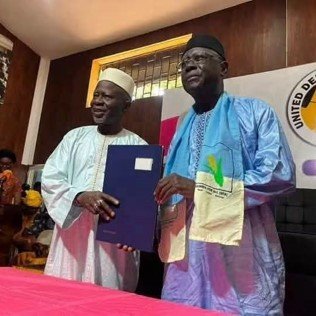
The alliance between President Adama Barrow’s National People’s Party (NPP) and Mama Kandeh’s Gambia Democratic Congress (GDC) is reshaping Gambian politics ahead of the December 2026 elections, strengthening Barrow’s hold in rural strongholds while raising questions about whether such coalitions prioritize citizens or elite survival.
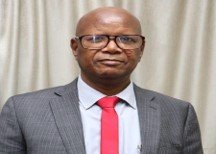
Veteran journalist and public affairs commentator Demba Ali Jawo has described the alliance between the ruling National People’s Party (NPP) and the Gambia Democratic Congress (GDC) as a tactical victory for President Adama Barrow.
Speaking on Coffee Time with Peter Gomez, Jawo said the coalition represents a significant development in Gambian politics, despite the GDC’s recent decline in popularity. He noted that the partnership provides Barrow with a strategic advantage, particularly in the Jimara area, where GDC leader Mama Kandeh has traditionally enjoyed strong support.
“The alliance reflects the fluid nature of politics,” Jawo remarked, adding that rival parties often join forces based on strategic interests and survival rather than ideology or the welfare of citizens.
Reflecting on the country’s political history, Jawo compared governance and press freedom under Presidents Sir Dawda Kairaba Jawara, Yahya Jammeh, and Adama Barrow. Drawing from his own experiences as a journalist, he recalled being detained during both the Jawara and Jammeh administrations but emphasized that he has not been arrested under the current government.
The development underscores the shifting dynamics of Gambian politics, where alliances continue to reshape the landscape ahead of future contests.
In essence, the NPP-GDC alliance is both a tactical masterstroke and a test of Gambian democracy: it strengthens Barrow’s electoral prospects but raises pressing questions about whether political deals serve the people or the politicians.
Rivalry turned partnership: Barrow and Kandeh’s rivalry dates back to the 2007 National Assembly elections, when Kandeh defeated Barrow in Jimara. Their political paths diverged sharply, with Kandeh founding the GDC in 2016 and contesting presidential elections as a third force.
Opposition to Barrow’s 2021 win: Kandeh previously rejected Barrow’s re-election, aligning with other opposition leaders to dispute the results. His reversal in 2026 underscores the fluidity of Gambian politics.
Implications for Gambian Democracy
Strengthened incumbency: The alliance consolidates Barrow’s position, making the December 2026 election less competitive in key regions.
Weakening opposition coalitions: By absorbing GDC support, the NPP reduces the chances of a unified opposition front, which has historically struggled to maintain cohesion.
Citizen skepticism: While leaders frame the alliance as national reconciliation, critics argue it reflects elite survival strategies rather than genuine ideological alignment or citizen-focused governance.