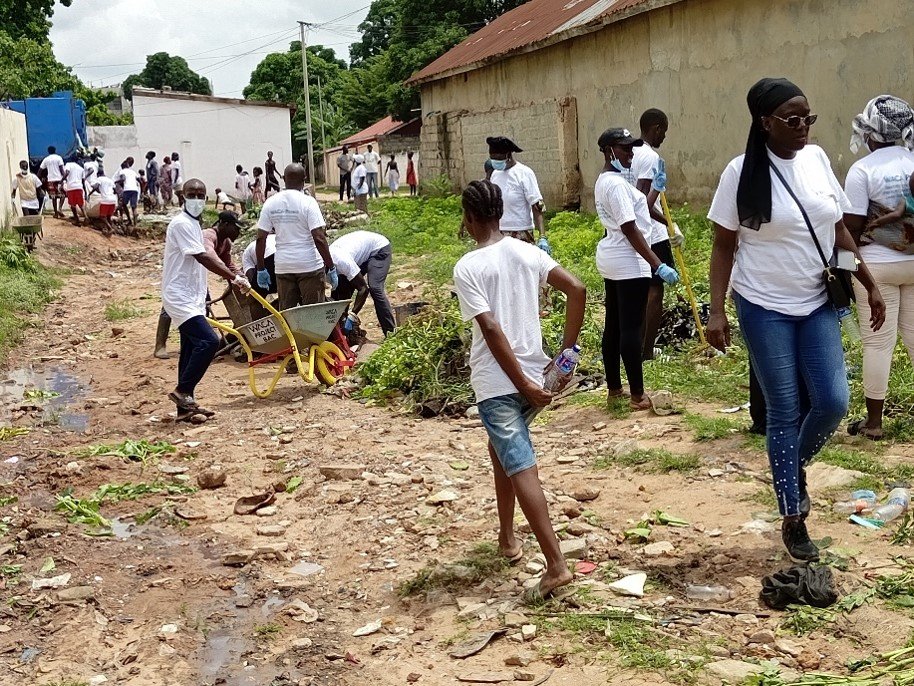
The National Environment Agency (NEA), through its Coastal and Marine Environment and in collaboration with the West Africa Coastal Areas (WACA) project and with the local communities marked this year’s International Coastal Clean-Up Day with a renewed focus on the country’s sensitive coastal streams. The initiative, led by Lamin Komma, Programme Manager for the Coastal Marine Environment Programme at NEA, brought together residents, councillors, and stakeholders to tackle waste along the Kotu stream corridor.
Komma explained that the annual event, commemorated globally on the third Saturday of September, is vital for protecting The Gambia’s fragile ecosystems. “The essence is to clean our coastal beaches and other ecosystems that have been littered with all kinds of waste,” he said. This year’s programme shifted attention from the open coast stretching 80 kilometres from Barra to Kartong to the Kotu stream, a biodiversity hotspot that flows into the Atlantic Ocean.
The Kotu stream was chosen because of its ecological and social importance. Stretching from Nema-Kunku to Kotu, the stream passes through 11 communities divided into nine wards. These settlements are highly vulnerable to flooding during the rainy season, making waste management and ecosystem protection critical. Kommo emphasized that the stream supports biodiversity conservation, tourism, and climate resilience, but is increasingly threatened by solid and liquid waste.
The clean-up was organised as a community-based initiative, with ward councillors coordinating efforts at their respective sites. “We are giving everything back to the community and just coordinating the activity,” Komma noted, highlighting the importance of local ownership in environmental protection.
By concentrating on the stream’s banks rather than entering the water itself, the initiative aims to reduce pollution and safeguard the ecosystem. The NEA hopes that such efforts will strengthen resilience against climate impacts, protect tourism assets, and preserve biodiversity for future generations.
This initiative reflects a growing recognition that environmental stewardship must be rooted in community action. The Gambia’s participation in International Coastal Clean-Up Day underscores the country’s commitment to protecting its natural heritage while empowering local communities to take charge of their environment.
Latrikunda Yiringanya Councillor Musa Bah has praised residents for their strong turnout during activities marking International Coastal Cleaning Day, noting that the initiative has transformed a once heavily polluted area into a cleaner, healthier environment.
“For years, this place was a breeding ground for mosquitoes due to indiscriminate dumping,” Bah explained. “Thanks to West Africa Coastal Areas (WACA) and the Council, and most importantly the community, we have been able to clear the waste and restore our surroundings.”
The cleanup saw residents divide into groups, covering both Latrikunda and nearby Kotu. Bah emphasised that the effort was entirely voluntary, driven by a shared commitment to tackle flooding and waste management challenges. “One individual cannot do it alone,” he said. “It takes teamwork and community spirit.”
Despite progress, Bah acknowledged ongoing issues with indiscriminate dumping, particularly at night. He called for greater sensitisation, stressing that neither the Council nor central government can solve the problem without active citizen participation.
To discourage future dumping, the community has erected signboards and cleared a former dump site with Council support. Bah urged residents to maintain momentum: “When we have a clean environment, we are helping ourselves. It’s for our own good.”
Bah encouraged residents across the municipality to embrace voluntary work, regardless of incentives. “Transport reform or no transport reform, this is about us. Whenever we call for cleansing work, let’s come together and clean our environment.”