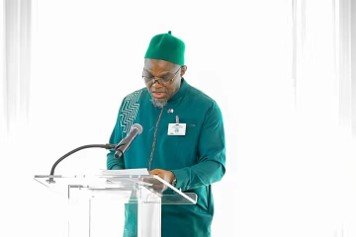
On the sidelines of the 81st Session of the United Nations General Assembly, Vice President of The Gambia, H.E. Mohammed B.S. Jallow, urged stronger and more predictable financing to accelerate Africa’s efforts toward malaria elimination.
Speaking at a high-level event titled “Africa’s Leadership for Sustainable Malaria Financing: A Multisectoral Path to Elimination”, Vice President Jallow emphasized the persistent burden of malaria across the continent and the growing challenges posed by climate change, drug and insecticide resistance, and limited investment in health systems.
Highlighting The Gambia’s progress, Jallow noted that malaria incidence in the country declined from 39 to 20 cases per 1,000 population between 2024 and 2025. Parasite prevalence among children under five has also dropped to 0.8 percent. He reaffirmed the government’s commitment to achieving a malaria-free Gambia by 2030, supported by the National Malaria Elimination Strategic Plan (2026–2030) and strengthened climate-resilient health measures under NDC 3.0.
While stressing the importance of domestic financing and private-sector participation, Jallow cautioned that national resources alone cannot sustain the level of investment required to reach elimination. He called for stronger international partnerships, predictable financing, and continued access to medicines, diagnostics, technologies, and technical expertise to protect the gains already made.
The Gambia also reaffirmed its support for the Big Push Against Malaria agenda and its collaboration with partners including the Global Fund, Gavi, and other international development and financial institutions.
“Our deliberations here must lead to decisions that are felt beyond this room,” Jallow said, underscoring that the ultimate measure of success will be lives protected, communities freed from malaria transmission, and a generation of Africans growing up without malaria as a constant threat